DEX vs CEX: Decentralized vs Centralized Exchanges
Centralized exchanges hold your funds and feel like apps; decentralized exchanges let you trade from your own wallet. Here is how the two compare and when to use each.

By Emily Volker, Editor-in-Chief
Editorial Strategy, Investigative Journalism, Crypto Media, E-E-A-T Standards
✓ Reviewed by Olivia Bennett· Blockchain Security Researcher
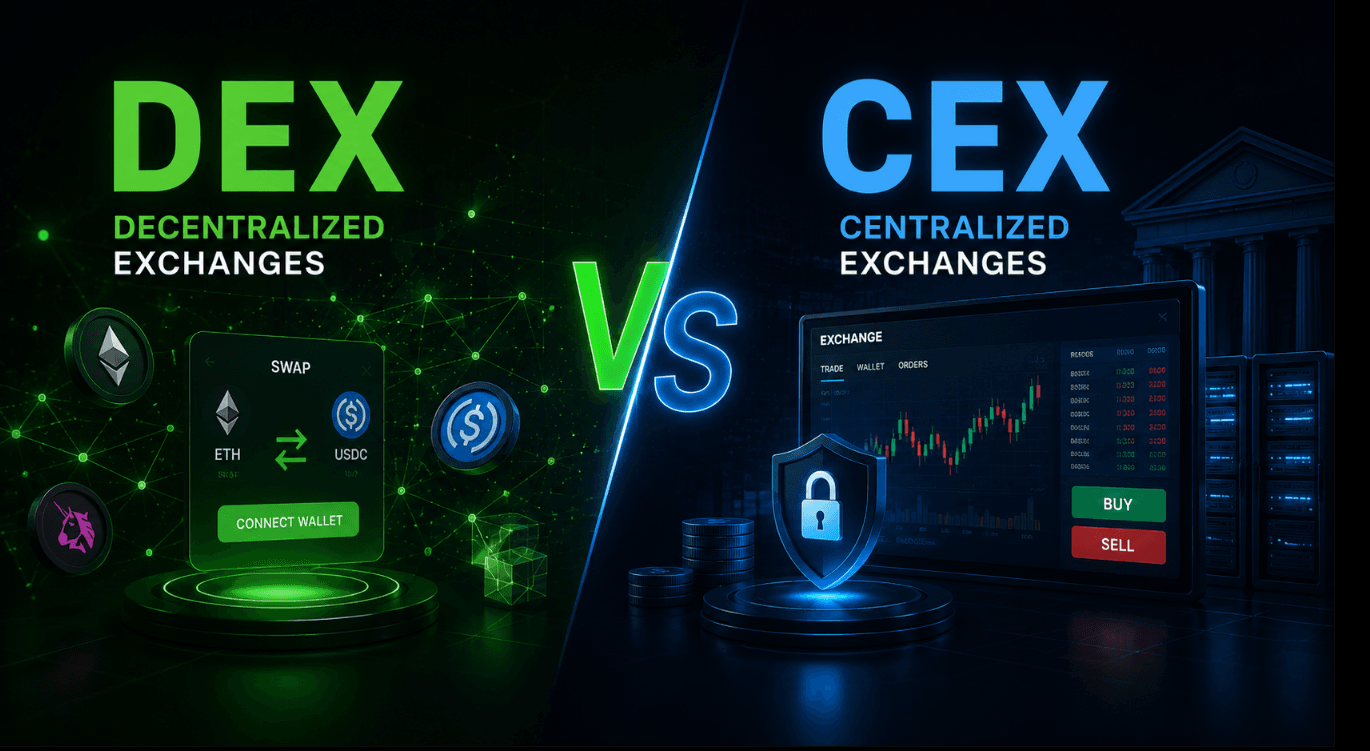
A centralized exchange, or CEX, is a company that holds your funds and matches your trades, much like a brokerage with a polished app. A decentralized exchange, or DEX, is a set of smart contracts that lets you trade directly from your own wallet without handing custody to anyone. The core difference is who controls the assets: with a CEX you trust the platform, while with a DEX you trust the code and keep your own keys.
Key takeaways
- CEXs hold your assets for you; DEXs let you trade from self-custody.
- CEXs usually offer easier onboarding, fiat support, and customer service.
- DEXs offer permissionless access and remove single-company custody risk.
- Each carries different security risks: platform failure versus smart-contract bugs.
- Many users combine both, matching the tool to the task.
How each type works
A centralized exchange runs an internal order book and database. You deposit funds, the exchange credits your account, and trades are settled on its own ledger rather than on a blockchain in real time. This makes trading fast and cheap, but it also means the exchange controls your balance until you withdraw.
A decentralized exchange settles trades on-chain through smart contracts. Many DEXs use automated market makers and liquidity pools instead of order books, so you swap against a pool rather than matching with another trader. Your wallet signs each transaction, and you never give up custody of your assets at any point in the trade.
Custody and control
Custody is the heart of the DEX versus CEX debate. On a CEX, the saying not your keys, not your coins applies: if the platform is hacked, frozen, or mismanaged, your funds can be at risk regardless of your own security habits. On a DEX, you hold the keys, which removes that platform risk but places the full burden of security and accuracy on you.
Choosing between a DEX and a CEX is really choosing which risk you would rather manage: someone else's competence, or your own. — CoinRadar Daily analysis
Ease of use and access
Where CEXs are stronger
Centralized exchanges typically win on convenience. They support deposits from bank accounts and cards, offer familiar interfaces, provide customer support, and can sometimes help recover access if you lose a password. For newcomers converting local currency into crypto for the first time, a reputable CEX is often the simplest entry point.
Where DEXs are stronger
Decentralized exchanges are permissionless: anyone with a wallet can trade without an account or approval. They often list new tokens far earlier than centralized platforms and integrate directly with the wider DeFi ecosystem. The trade-off is a steeper learning curve and the need to manage gas fees and wallet security yourself.
Fees, security, and other trade-offs
- Fees: CEXs charge trading fees; DEXs add network gas costs that vary with congestion.
- Security model: CEXs face hacks and insolvency; DEXs face contract bugs and user error.
- Privacy: CEXs usually require identity verification; DEXs generally do not.
- Liquidity: large CEXs often have deep liquidity; DEX liquidity varies by pool.
- Recovery: CEXs can sometimes assist; DEX mistakes are typically irreversible.
Which should you use?
There is no single right answer, and many experienced users rely on both. A common pattern is to use a trusted CEX for converting fiat and for large, simple trades, then move assets to a self-custody wallet for DEX trading, early token access, and DeFi activity. Match the tool to the task: prioritize convenience and fiat access where a CEX shines, and prioritize custody and openness where a DEX shines.
Frequently asked questions
Is a DEX safer than a CEX?+
Neither is universally safer; they carry different risks. A DEX removes the risk of a company losing your funds but exposes you to smart-contract bugs and user error. A CEX simplifies security but concentrates risk in one platform.
Do I need to verify my identity on a DEX?+
Generally no. Most decentralized exchanges let you trade directly from a wallet without identity verification, whereas centralized exchanges usually require it to comply with regulations.
Can I buy crypto with a credit card on a DEX?+
Typically not directly. DEXs trade crypto for crypto, so users usually buy their first crypto on a centralized exchange or through an on-ramp service and then move it to a wallet to use a DEX.
Why are DEX fees sometimes higher?+
DEX trades settle on-chain, so you pay network gas fees on top of any protocol fee. During periods of heavy network congestion, those gas costs can rise sharply, especially for small trades.
Written by
Emily VolkerEditor-in-ChiefEditorial Strategy, Investigative Journalism, Crypto Media, E-E-A-T Standards
Emily Volker is the Editor-in-Chief of CoinRadar Daily, where she leads a multilingual editorial team covering cryptocurrency markets, blockchain innovation, Web3, and global digital asset regulation across eight languages. With more than a decade of experience in financial and technology journalism, she has played a key role in developing high editorial standards and trusted reporting within the digital asset industry. Emily began her career as a financial journalist reporting on commodities, energy markets, and emerging technologies before discovering Bitcoin and decentralized finance in the early 2010s. She later moved to London to join one of Europe's early blockchain-focused media organizations, where she advanced into senior editorial leadership. Her experience reporting through both the rapid expansion of the 2017 ICO boom and the subsequent market correction reinforced her commitment to fact-based, research-driven journalism in an industry often influenced by speculation. She holds a Master's degree in International Journalism from City, University of London, and has completed executive studies in digital media strategy through the Reuters Institute at Oxford. Emily is a strong advocate for editorial transparency, rigorous verification, and responsible financial reporting. She also helped integrate Google's E-E-A-T principles—Experience, Expertise, Authoritativeness, and Trustworthiness—into the editorial standards followed by CoinRadar Daily. Under her leadership, CoinRadar Daily has expanded into a global cryptocurrency news platform publishing content in eight languages with a network of editors, analysts, and contributors across four continents. Emily oversees investigative reporting, editorial policy, content quality, and fact-checking processes to ensure every article meets the publication's standards for accuracy, credibility, and independence. Alongside her editorial responsibilities, Emily mentors aspiring journalists through digital media initiatives and regularly speaks at international conferences focused on journalism, fintech, blockchain technology, and digital assets, where she discusses responsible reporting, combating misinformation, and the evolving future of financial media.

✓Reviewed & edited by
Olivia BennettBlockchain Security ResearcherSmart Contract Security, Audit Reports, Exploits, DeFi Hacks, White-Hat Research
Olivia Bennett is the Blockchain Security Researcher at CoinRadar Daily, where she specializes in smart contract security, DeFi risk analysis, blockchain infrastructure, and protocol vulnerabilities. Drawing on years of hands-on cybersecurity experience, she delivers in-depth reporting that explains both the technical details and the real-world implications of security incidents across the digital asset ecosystem. Before joining CoinRadar Daily, Olivia built her career in cybersecurity, working in penetration testing, blockchain security assessments, and smart contract auditing. She participated in numerous security reviews for decentralized applications and blockchain protocols, helping identify critical vulnerabilities before they could be exploited. Her responsible disclosure work has contributed to improving the security of several major DeFi projects and protecting millions of dollars in digital assets. Olivia earned a Bachelor of Science in Computer Science from the University of Edinburgh and later completed advanced professional training in offensive security and blockchain technologies. Her combination of software security expertise and blockchain knowledge enables her to provide readers with clear, evidence-based analysis of exploits, protocol upgrades, and emerging attack vectors. At CoinRadar Daily, Olivia publishes detailed investigations into blockchain exploits, smart contract audits, cross-chain security, wallet protection, and evolving cyber threats affecting the crypto industry. She is particularly committed to translating highly technical research into practical guidance that helps investors, developers, and blockchain users better understand protocol risk and security best practices. Alongside her editorial work, Olivia contributes educational resources covering secure wallet management, decentralized finance security, and blockchain infrastructure. She also participates in industry events and technical discussions focused on strengthening Web3 security standards, supporting CoinRadar Daily's mission to provide accurate, research-driven coverage of the rapidly evolving digital asset landscape.
CoinRadar Daily content is written by named analysts and checked against our editorial standards. Market data is indicative and informational only — nothing here is financial advice.
DeFi services, rated
How we score →Independent, rubric-scored tables covering the services this defi coverage keeps running into.
Best DeFi Protocols
Top rated: Uniswap Protocol 9.0
The base layer everything else is built on.
4rated →
Best Decentralised Exchanges
Top rated: Uniswap 8.7
Swap venues where you never hand over your keys.
5rated →
Best Crypto Lending Platforms
Top rated: Aave 8.3
Borrow against your holdings, or lend them out.
4rated →
Keep Reading
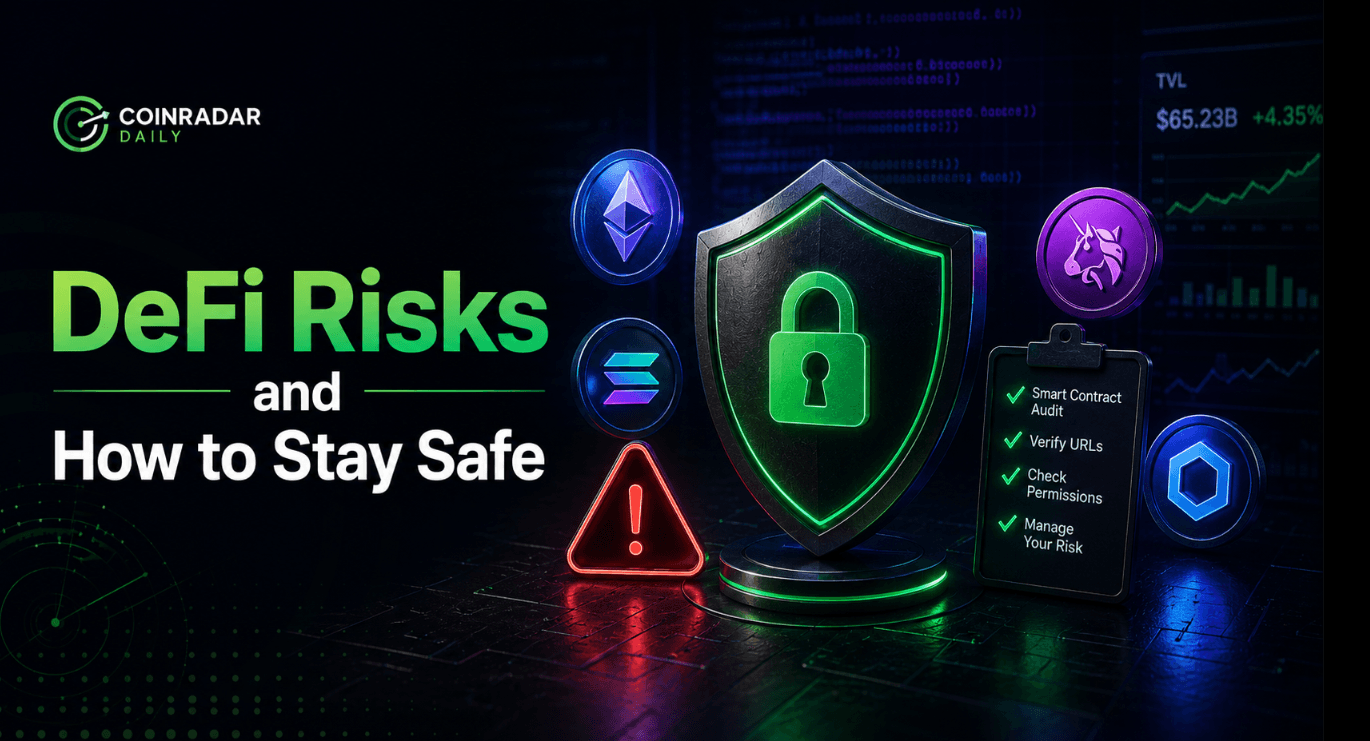
DeFi Risks and How to Stay Safe
DeFi opens powerful financial tools to anyone, but it also removes the safety nets of traditional finance. Here are the main risks and the habits that help you avoid them.
James Park · May 24, 2026→
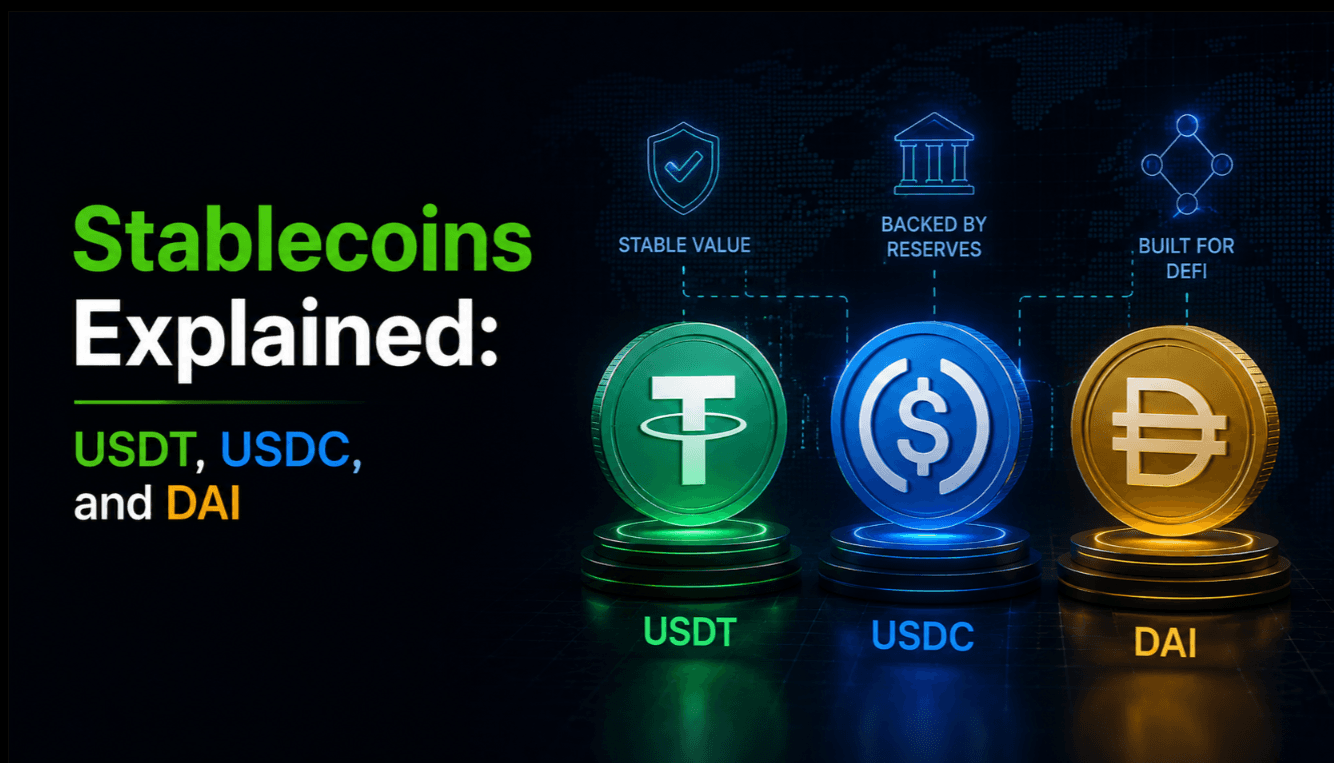
Stablecoins Explained: USDT, USDC, and DAI
Stablecoins aim to hold a steady value, usually one US dollar, so crypto users can move and store money without volatility. Here is how USDT, USDC, and DAI differ.
Olivia Bennett · June 4, 2026→
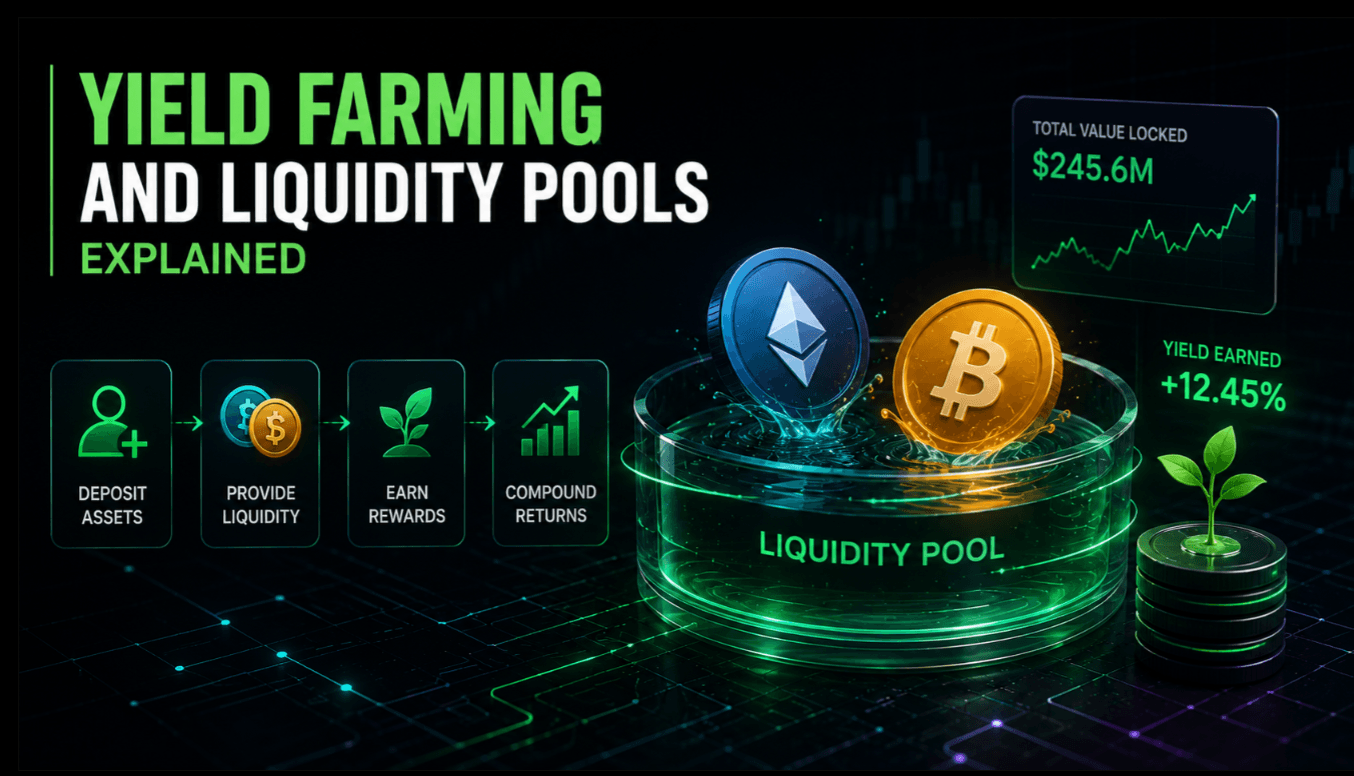
Yield Farming and Liquidity Pools Explained
Yield farming lets you earn returns by supplying assets to DeFi protocols, often through liquidity pools. Here is where those returns come from and what can go wrong.
James Park · June 12, 2026→