What Is Ethereum and How Does It Work?
Ethereum is a global, programmable blockchain where developers build apps and ETH pays for the computing. Here is how the network actually works, from smart contracts to validators.

By Emily Volker, Editor-in-Chief
Editorial Strategy, Investigative Journalism, Crypto Media, E-E-A-T Standards
✓ Reviewed by Olivia Bennett· Blockchain Security Researcher
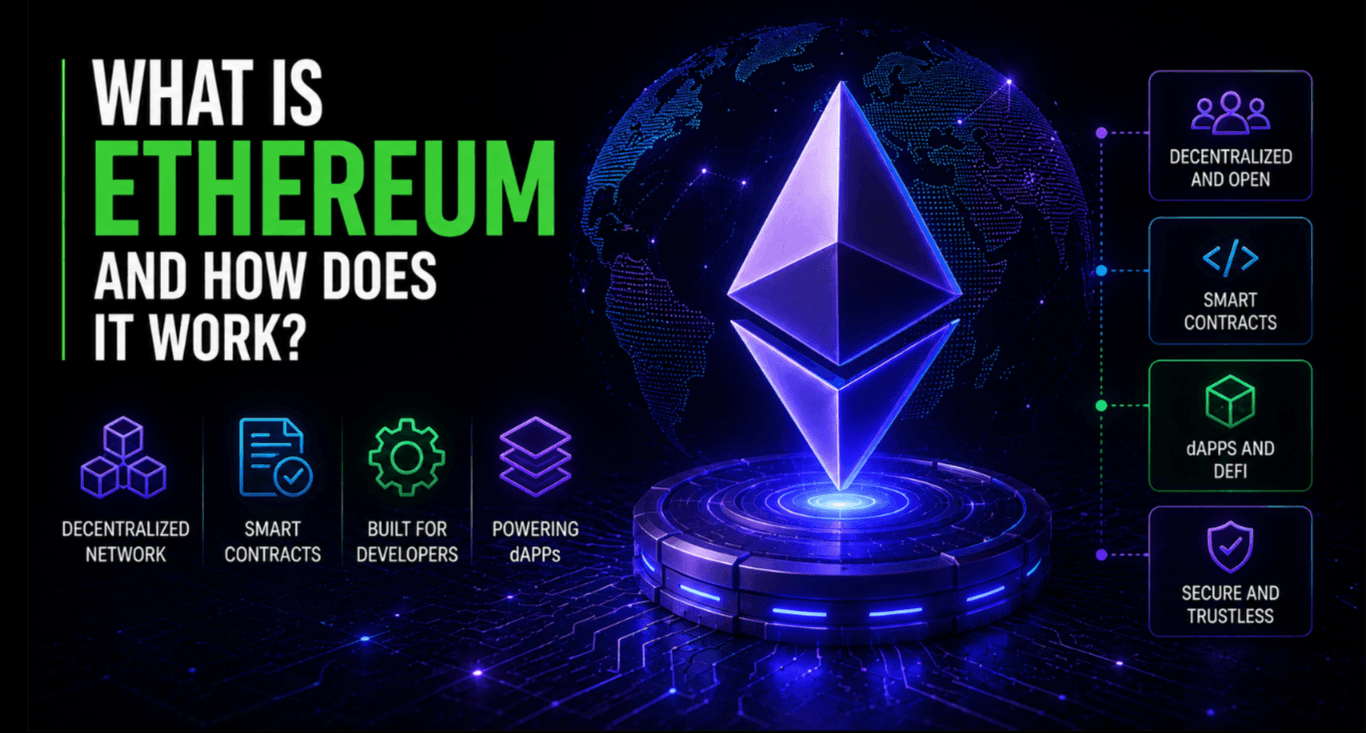
Ethereum is a decentralized, programmable blockchain that lets anyone build and run applications without a central operator. Where Bitcoin was designed mainly to move and store value, Ethereum adds a built-in computer that executes code called smart contracts. Its native token, ETH, pays for the computation and secures the network. In short, Ethereum is a shared global platform that records transactions and runs software the same way for everyone, everywhere.
Key takeaways
- Ethereum is a programmable blockchain, not just a currency, and it runs smart contracts.
- ETH is the native token used to pay transaction fees and reward validators.
- Smart contracts are self-executing programs that handle agreements without a middleman.
- Since moving to proof of stake, Ethereum is secured by validators who stake ETH rather than by miners.
- Thousands of applications, from finance to gaming, are built on top of Ethereum.
Ethereum in one sentence
Think of Ethereum as a world computer that no single company owns. Instead of running on one set of servers, its software is replicated across thousands of independent machines that agree on the same state. Because no one controls it, applications built on Ethereum cannot be quietly shut off, censored, or altered by a single party. That shared, neutral foundation is what makes the network useful for money, contracts, and digital ownership.
What are smart contracts?
A smart contract is a piece of code stored on the blockchain that runs exactly as written. When certain conditions are met, it executes automatically. A simple example is an escrow that releases funds once both parties confirm a deal, with no lawyer or bank in the middle. Because the code is public and the outcome is enforced by the network, users can interact with strangers and still trust the result.
Why this matters
Smart contracts turn the blockchain from a ledger into a platform. Developers can compose them together like building blocks, which is why a lending app can plug into a trading app, which can plug into a stablecoin. This composability is the reason an entire ecosystem of decentralized finance, marketplaces, and tools grew on Ethereum rather than starting from scratch each time.
How transactions and gas work
Every action on Ethereum, from sending ETH to using an app, is a transaction that must be processed and recorded. Because the network has limited capacity, users pay a fee, measured in gas, to have their transaction included. Gas prices rise when the network is busy and fall when it is quiet. The fee compensates validators for the work and storage involved, and it also discourages spam by making each action cost something.
How Ethereum is secured
Ethereum uses a consensus system called proof of stake. Participants known as validators lock up ETH as a deposit, then take turns proposing and confirming new blocks of transactions. Honest behavior earns rewards, while dishonest behavior can cause validators to lose part of their stake. This economic incentive keeps the network honest without relying on energy-intensive mining.
Ethereum's real innovation was not a faster ledger but a shared, neutral place to run code, which is why so many different industries ended up building on the same base. — CoinRadar Daily analysis
What is ETH actually used for?
- Paying gas fees to send transactions and interact with applications.
- Staking to help secure the network and earn rewards.
- Serving as collateral and a unit of value across decentralized finance.
- Acting as a store of value and a tradable asset for investors.
Getting started safely
To use Ethereum you need a wallet, which holds your keys and lets you sign transactions. You can buy ETH on an exchange, then move it to a wallet you control. Always double-check addresses, keep your recovery phrase offline, and start with small amounts while you learn. Ethereum is powerful precisely because it is permissionless, but that also means you are responsible for your own security.
Frequently asked questions
Is Ethereum the same as ETH?+
Not exactly. Ethereum is the network and platform, while ETH is the native token used on it. People often say Ethereum when they mean the coin, but technically ETH is the asset and Ethereum is the system it runs on.
What makes Ethereum different from Bitcoin?+
Bitcoin focuses on being digital money and a store of value. Ethereum adds a programmable layer that runs smart contracts and applications, making it a platform for many uses beyond simple payments.
Do I need to be technical to use Ethereum?+
No. Modern wallets and apps are designed for ordinary users. You can buy, hold, and use ETH without writing any code, though understanding fees and security basics will help you avoid mistakes.
Is Ethereum safe to use?+
The network itself is robust and battle-tested, but risks come from user error, scams, and buggy applications. Use trusted apps, protect your recovery phrase, and verify what you are signing before confirming.
Written by
Emily VolkerEditor-in-ChiefEditorial Strategy, Investigative Journalism, Crypto Media, E-E-A-T Standards
Emily Volker is the Editor-in-Chief of CoinRadar Daily, where she leads a multilingual editorial team covering cryptocurrency markets, blockchain innovation, Web3, and global digital asset regulation across eight languages. With more than a decade of experience in financial and technology journalism, she has played a key role in developing high editorial standards and trusted reporting within the digital asset industry. Emily began her career as a financial journalist reporting on commodities, energy markets, and emerging technologies before discovering Bitcoin and decentralized finance in the early 2010s. She later moved to London to join one of Europe's early blockchain-focused media organizations, where she advanced into senior editorial leadership. Her experience reporting through both the rapid expansion of the 2017 ICO boom and the subsequent market correction reinforced her commitment to fact-based, research-driven journalism in an industry often influenced by speculation. She holds a Master's degree in International Journalism from City, University of London, and has completed executive studies in digital media strategy through the Reuters Institute at Oxford. Emily is a strong advocate for editorial transparency, rigorous verification, and responsible financial reporting. She also helped integrate Google's E-E-A-T principles—Experience, Expertise, Authoritativeness, and Trustworthiness—into the editorial standards followed by CoinRadar Daily. Under her leadership, CoinRadar Daily has expanded into a global cryptocurrency news platform publishing content in eight languages with a network of editors, analysts, and contributors across four continents. Emily oversees investigative reporting, editorial policy, content quality, and fact-checking processes to ensure every article meets the publication's standards for accuracy, credibility, and independence. Alongside her editorial responsibilities, Emily mentors aspiring journalists through digital media initiatives and regularly speaks at international conferences focused on journalism, fintech, blockchain technology, and digital assets, where she discusses responsible reporting, combating misinformation, and the evolving future of financial media.

✓Reviewed & edited by
Olivia BennettBlockchain Security ResearcherSmart Contract Security, Audit Reports, Exploits, DeFi Hacks, White-Hat Research
Olivia Bennett is the Blockchain Security Researcher at CoinRadar Daily, where she specializes in smart contract security, DeFi risk analysis, blockchain infrastructure, and protocol vulnerabilities. Drawing on years of hands-on cybersecurity experience, she delivers in-depth reporting that explains both the technical details and the real-world implications of security incidents across the digital asset ecosystem. Before joining CoinRadar Daily, Olivia built her career in cybersecurity, working in penetration testing, blockchain security assessments, and smart contract auditing. She participated in numerous security reviews for decentralized applications and blockchain protocols, helping identify critical vulnerabilities before they could be exploited. Her responsible disclosure work has contributed to improving the security of several major DeFi projects and protecting millions of dollars in digital assets. Olivia earned a Bachelor of Science in Computer Science from the University of Edinburgh and later completed advanced professional training in offensive security and blockchain technologies. Her combination of software security expertise and blockchain knowledge enables her to provide readers with clear, evidence-based analysis of exploits, protocol upgrades, and emerging attack vectors. At CoinRadar Daily, Olivia publishes detailed investigations into blockchain exploits, smart contract audits, cross-chain security, wallet protection, and evolving cyber threats affecting the crypto industry. She is particularly committed to translating highly technical research into practical guidance that helps investors, developers, and blockchain users better understand protocol risk and security best practices. Alongside her editorial work, Olivia contributes educational resources covering secure wallet management, decentralized finance security, and blockchain infrastructure. She also participates in industry events and technical discussions focused on strengthening Web3 security standards, supporting CoinRadar Daily's mission to provide accurate, research-driven coverage of the rapidly evolving digital asset landscape.
CoinRadar Daily content is written by named analysts and checked against our editorial standards. Market data is indicative and informational only — nothing here is financial advice.
Ethereum services, rated
How we score →Independent, rubric-scored tables covering the services this ethereum coverage keeps running into.
Best Liquid Staking Protocols
Top rated: Rocket Pool 8.1
Staking that hands you a tradable receipt token.
4rated →
Best Crypto Staking Platforms
Top rated: Figment 8.1
Services that stake on your behalf.
5rated →
Best DeFi Protocols
Top rated: Uniswap Protocol 9.0
The base layer everything else is built on.
4rated →
Keep Reading
Ethereum vs Bitcoin: Key Differences Explained
Ethereum and Bitcoin are the two largest crypto networks, but they were built for different goals. Here is a clear comparison of how they differ and where each one shines.
James Park · May 24, 2026→
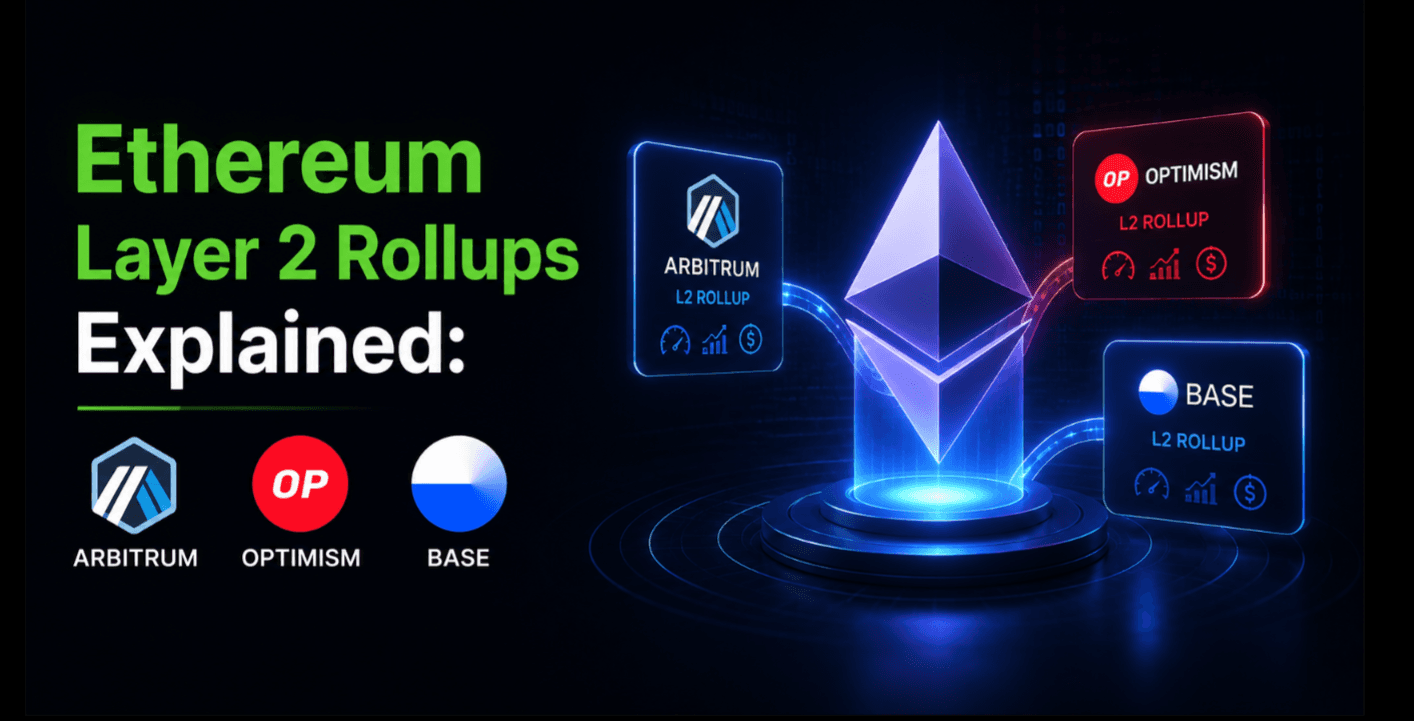
Ethereum Layer 2 Rollups Explained: Arbitrum, Optimism, Base
Layer 2 rollups make Ethereum faster and cheaper by moving activity off the main chain. Here is how rollups work, what Arbitrum, Optimism, and Base offer, and what to watch.
Emily Volker · May 26, 2026→
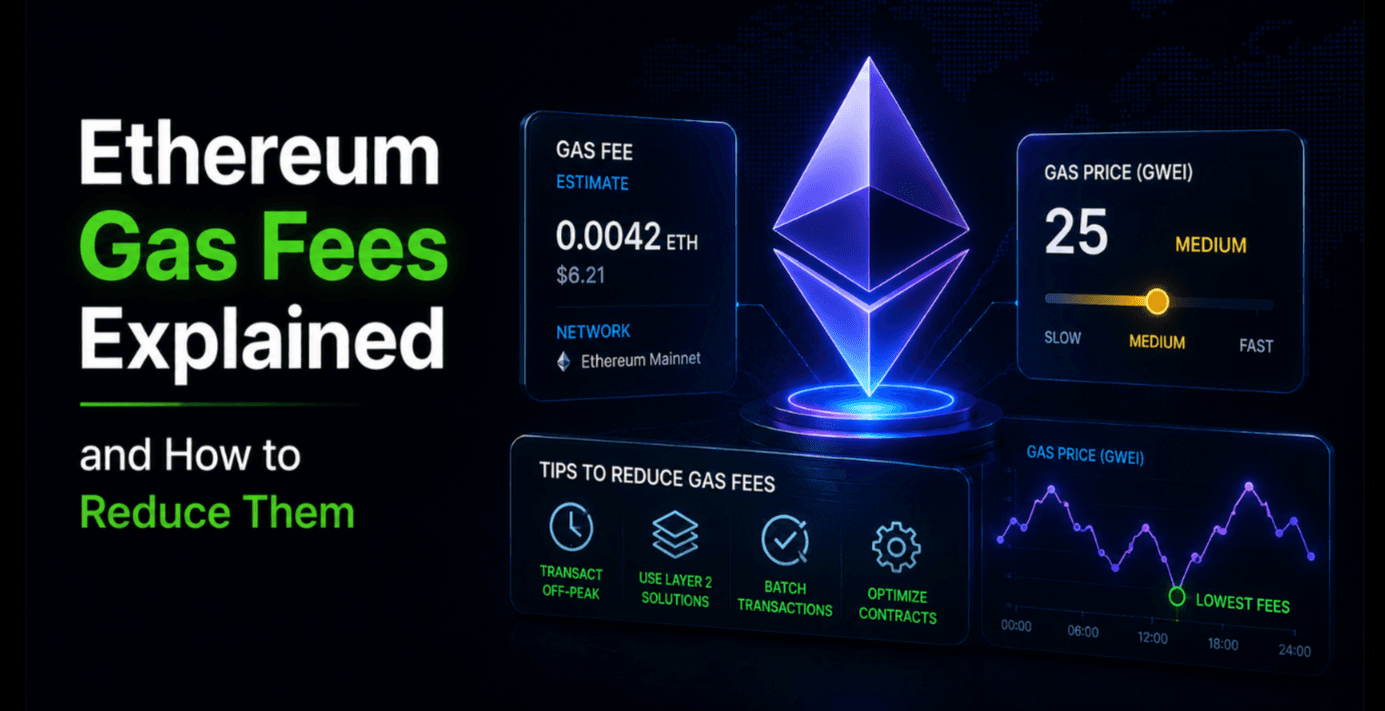
Ethereum Gas Fees Explained and How to Reduce Them
Gas fees are the cost of doing anything on Ethereum. Here is what gas is, why it gets expensive, and concrete tactics to pay less without taking shortcuts on security.
Olivia Bennett · June 4, 2026→