What Is DeFi? Decentralized Finance Explained Simply
DeFi rebuilds financial services on public blockchains so anyone with a wallet can lend, borrow, and trade without a bank or broker in the middle. Here is how it actually works.

By Emily Volker, Editor-in-Chief
Editorial Strategy, Investigative Journalism, Crypto Media, E-E-A-T Standards
✓ Reviewed by James Park· NFT & Web3 Gaming Analyst
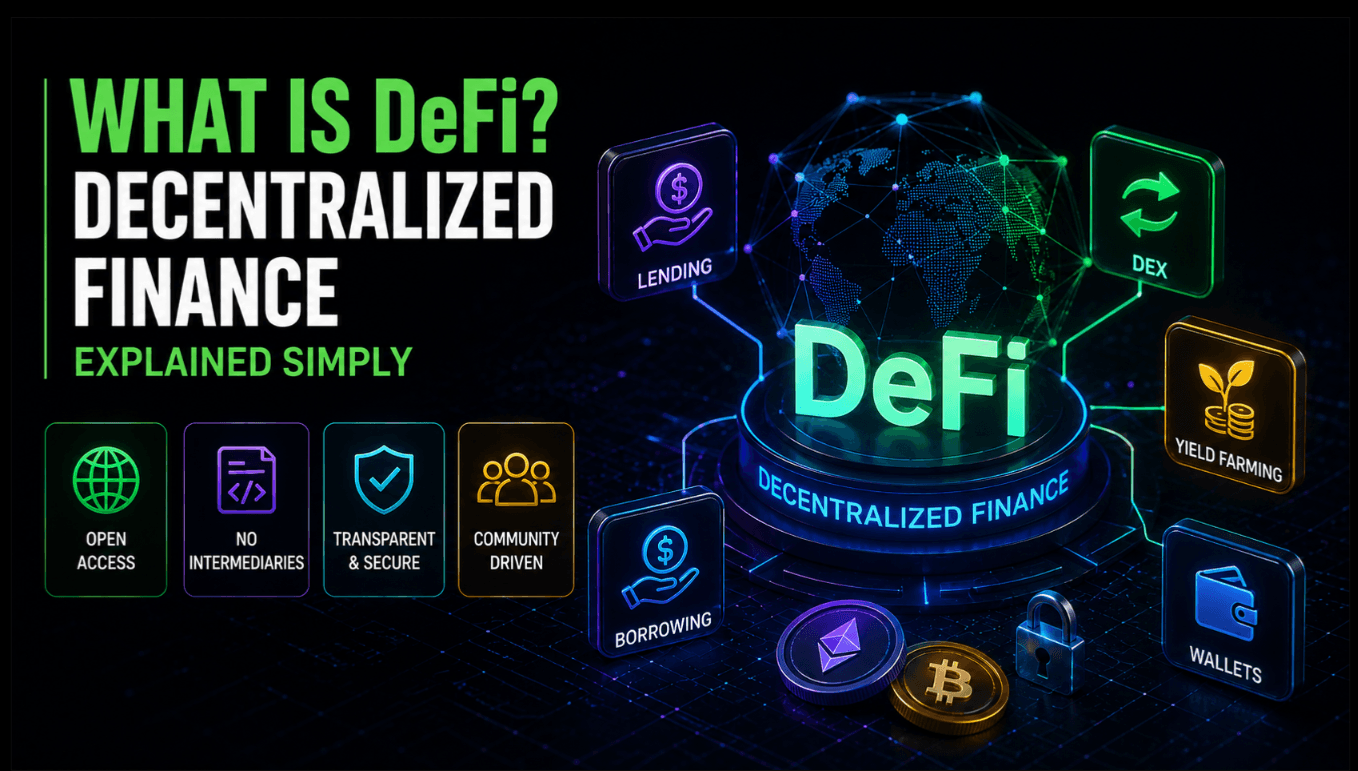
DeFi, short for decentralized finance, is a set of financial services built on public blockchains that run through code instead of companies. Rather than asking a bank to hold your money or a broker to settle a trade, you interact directly with smart contracts using a self-custody wallet. The result is a system where lending, borrowing, trading, and earning yield happen on open networks that anyone can access, inspect, and build on.
Key takeaways
- DeFi recreates banking, trading, and lending using smart contracts rather than intermediaries.
- You keep custody of your assets in your own wallet instead of trusting a third party to hold them.
- Most DeFi today runs on Ethereum and compatible chains, but the model spans many networks.
- Open access and transparency are the upside; smart-contract bugs and volatility are the downside.
- Understanding wallets, gas fees, and stablecoins is the practical starting point.
How DeFi differs from traditional finance
Traditional finance relies on trusted institutions. A bank records who owns what, a clearing house settles trades, and regulators supervise the whole arrangement. DeFi replaces much of that trust with verifiable code. A smart contract holds the rules for a loan or a trade, executes them automatically when conditions are met, and records the outcome on a public ledger that anyone can audit.
That shift has practical consequences. There is no account application, no business-hours cutoff, and no geographic gatekeeping at the protocol level. The trade-off is that you are responsible for your own keys and for understanding the contracts you use. Mistakes are usually irreversible, because there is no support desk that can claw back a transaction.
The building blocks of DeFi
Wallets and self-custody
Everything in DeFi starts with a wallet. A non-custodial wallet stores the private keys that control your assets, and it is the credential you use to sign every transaction. Because you hold the keys, you also hold full responsibility for backing them up safely.
Smart contracts
Smart contracts are programs deployed on a blockchain that execute exactly as written. They are the engines behind lending markets, exchanges, and yield strategies. Their predictability is a strength, but it also means a flaw in the code can be exploited just as reliably.
Stablecoins
Stablecoins are tokens designed to track a stable value such as the US dollar. They give users a way to hold and move value inside DeFi without exposure to the full volatility of assets like Bitcoin or Ether, which makes them the default unit of account across most protocols.
What you can actually do with DeFi
- Trade tokens directly on decentralized exchanges without creating an account.
- Lend assets to earn interest or borrow against collateral you already hold.
- Provide liquidity to pools and collect a share of trading fees.
- Hold stablecoins as a low-volatility store of value within a wallet.
- Bridge assets between blockchains to access services on different networks.
These services often connect to one another. The same stablecoin you earn as interest can be supplied to a liquidity pool, and the receipt token from that pool can sometimes be used as collateral elsewhere. This composability is why DeFi is sometimes described as money legos: small pieces that snap together into larger strategies.
The core promise of DeFi is not higher returns. It is that the rules are visible and the same for everyone who interacts with the contract. — CoinRadar Daily analysis
The risks you should weigh first
Open systems carry open risks. Smart-contract bugs can drain funds, volatile collateral can trigger liquidations, and unfamiliar protocols can turn out to be scams. Network fees can also spike during busy periods, making small transactions uneconomical. None of this means DeFi is unusable, but it does mean caution and small initial amounts are sensible while you learn.
How to get started safely
A reasonable path is to set up a reputable self-custody wallet, secure your recovery phrase offline, and start with a small amount you can afford to lose. Begin with established, widely-used protocols before exploring newer ones, and read about each contract before approving it. Treating your first weeks as a learning budget rather than an investment tends to produce better outcomes than chasing the highest advertised yields.
Frequently asked questions
Is DeFi the same as cryptocurrency?+
No. Cryptocurrencies are digital assets, while DeFi is the set of financial applications built on blockchains. DeFi uses cryptocurrencies and stablecoins as the assets that flow through its lending, trading, and earning services.
Do I need a bank account to use DeFi?+
No. DeFi protocols only require a self-custody wallet and some crypto to interact. You may still use a bank or exchange to convert local currency into crypto before moving funds into DeFi.
Is DeFi safe for beginners?+
It can be approached safely, but it carries real risks including smart-contract bugs and volatility. Beginners should start with small amounts, use established protocols, and secure their wallet recovery phrase carefully.
Why is most DeFi built on Ethereum?+
Ethereum pioneered programmable smart contracts and built the largest developer ecosystem early on. Many other chains now run compatible technology, but Ethereum and its related networks still host a large share of DeFi activity.
Written by
Emily VolkerEditor-in-ChiefEditorial Strategy, Investigative Journalism, Crypto Media, E-E-A-T Standards
Emily Volker is the Editor-in-Chief of CoinRadar Daily, where she leads a multilingual editorial team covering cryptocurrency markets, blockchain innovation, Web3, and global digital asset regulation across eight languages. With more than a decade of experience in financial and technology journalism, she has played a key role in developing high editorial standards and trusted reporting within the digital asset industry. Emily began her career as a financial journalist reporting on commodities, energy markets, and emerging technologies before discovering Bitcoin and decentralized finance in the early 2010s. She later moved to London to join one of Europe's early blockchain-focused media organizations, where she advanced into senior editorial leadership. Her experience reporting through both the rapid expansion of the 2017 ICO boom and the subsequent market correction reinforced her commitment to fact-based, research-driven journalism in an industry often influenced by speculation. She holds a Master's degree in International Journalism from City, University of London, and has completed executive studies in digital media strategy through the Reuters Institute at Oxford. Emily is a strong advocate for editorial transparency, rigorous verification, and responsible financial reporting. She also helped integrate Google's E-E-A-T principles—Experience, Expertise, Authoritativeness, and Trustworthiness—into the editorial standards followed by CoinRadar Daily. Under her leadership, CoinRadar Daily has expanded into a global cryptocurrency news platform publishing content in eight languages with a network of editors, analysts, and contributors across four continents. Emily oversees investigative reporting, editorial policy, content quality, and fact-checking processes to ensure every article meets the publication's standards for accuracy, credibility, and independence. Alongside her editorial responsibilities, Emily mentors aspiring journalists through digital media initiatives and regularly speaks at international conferences focused on journalism, fintech, blockchain technology, and digital assets, where she discusses responsible reporting, combating misinformation, and the evolving future of financial media.

✓Reviewed & edited by
James ParkNFT & Web3 Gaming AnalystNFTs, Web3 Gaming, GameFi, Digital Collectibles, Creator Economy
James Park serves as the NFT & Web3 Gaming Analyst at CoinRadar Daily, where he covers the rapidly evolving worlds of blockchain gaming, digital collectibles, metaverse ecosystems, and creator-driven economies. Combining expertise in interactive media with blockchain technology, he analyzes how NFTs and decentralized gaming continue to reshape digital ownership and online communities. James earned a Master of Fine Arts in Digital Media from NYU Tisch School of the Arts, giving him a unique perspective that blends creative storytelling, digital culture, and emerging technology. Rather than viewing NFTs solely through an investment lens, he examines their broader impact on entertainment, gaming, intellectual property, and community engagement. Prior to joining CoinRadar Daily, James reported on the NFT industry and blockchain gaming for several leading digital media outlets, covering the explosive growth of the NFT market, the transition toward utility-focused collections, and the evolution of GameFi. His close relationships with independent developers, digital artists, and gaming communities allow him to identify important industry trends long before they reach mainstream attention. His reporting places particular emphasis on sustainable Web3 game design, token economies, and the long-term viability of blockchain-powered virtual worlds. James has published extensive research analyzing why certain gaming ecosystems thrive while others struggle with inflationary token models, weak player retention, or unsustainable reward structures. His market analysis is frequently referenced by blockchain startups, investors, and game studios evaluating new Web3 projects. Beyond journalism, James actively participates in NFT and decentralized creator communities while following developments in digital art, virtual economies, and next-generation gaming technologies. He also contributes educational content on blockchain gaming and regularly speaks about the future of digital ownership, helping CoinRadar Daily deliver balanced, research-driven coverage at the intersection of technology, gaming, and crypto innovation.
CoinRadar Daily content is written by named analysts and checked against our editorial standards. Market data is indicative and informational only — nothing here is financial advice.
DeFi services, rated
How we score →Independent, rubric-scored tables covering the services this defi coverage keeps running into.
Best DeFi Protocols
Top rated: Uniswap Protocol 9.0
The base layer everything else is built on.
4rated →
Best Decentralised Exchanges
Top rated: Uniswap 8.7
Swap venues where you never hand over your keys.
5rated →
Best Crypto Lending Platforms
Top rated: Aave 8.3
Borrow against your holdings, or lend them out.
4rated →
Keep Reading
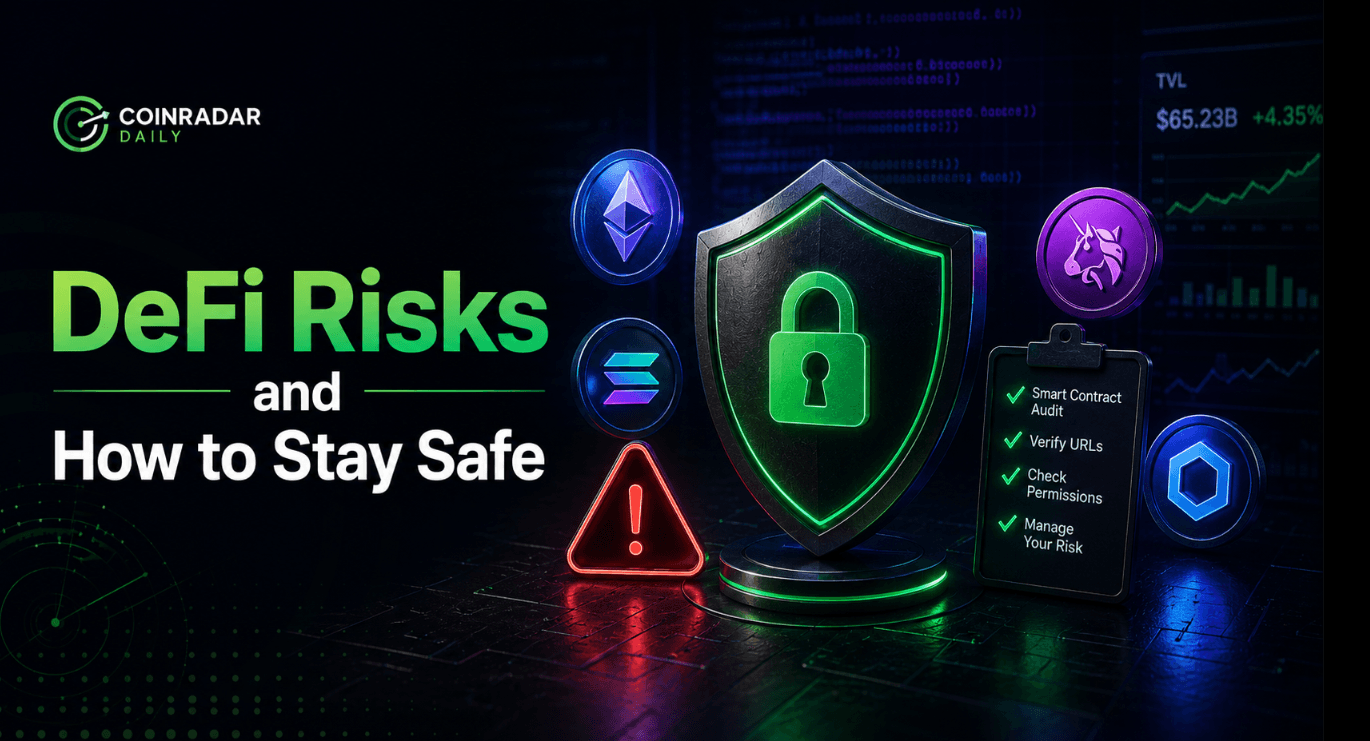
DeFi Risks and How to Stay Safe
DeFi opens powerful financial tools to anyone, but it also removes the safety nets of traditional finance. Here are the main risks and the habits that help you avoid them.
James Park · May 24, 2026→
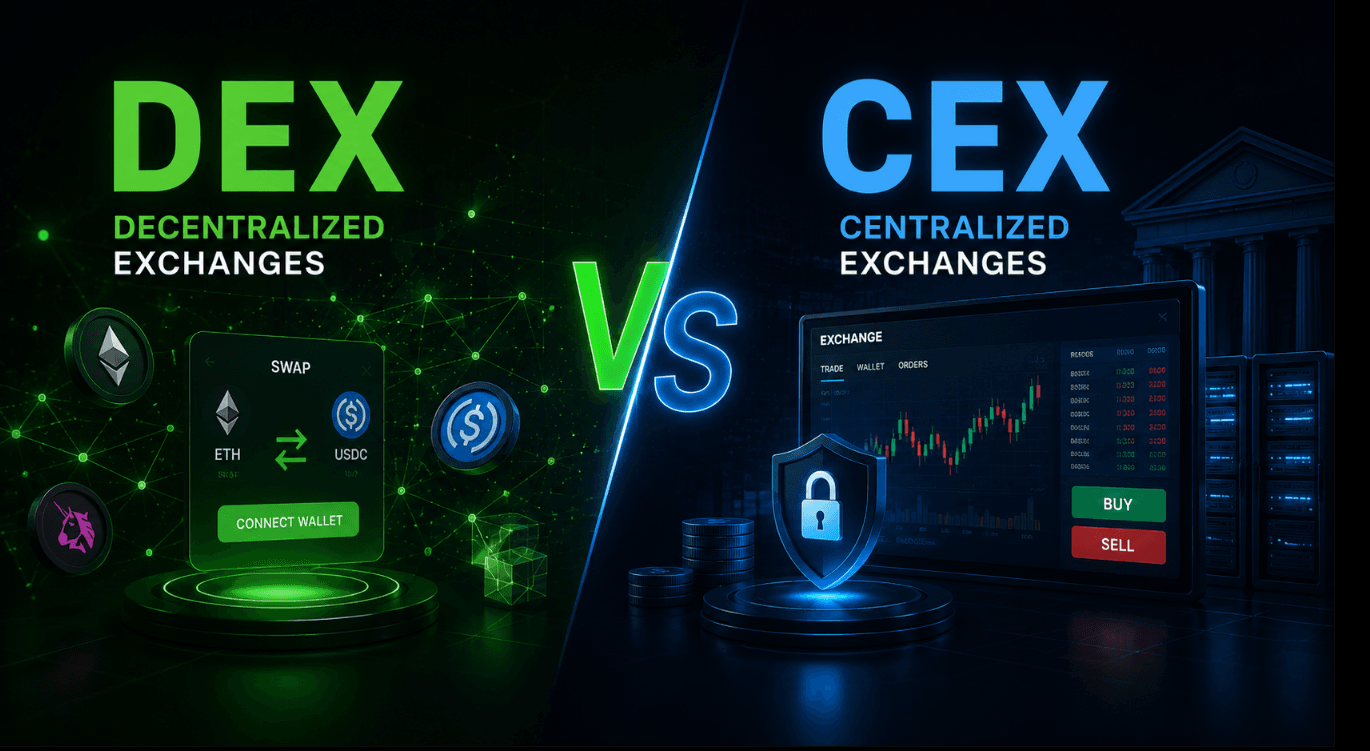
DEX vs CEX: Decentralized vs Centralized Exchanges
Centralized exchanges hold your funds and feel like apps; decentralized exchanges let you trade from your own wallet. Here is how the two compare and when to use each.
Emily Volker · May 26, 2026→
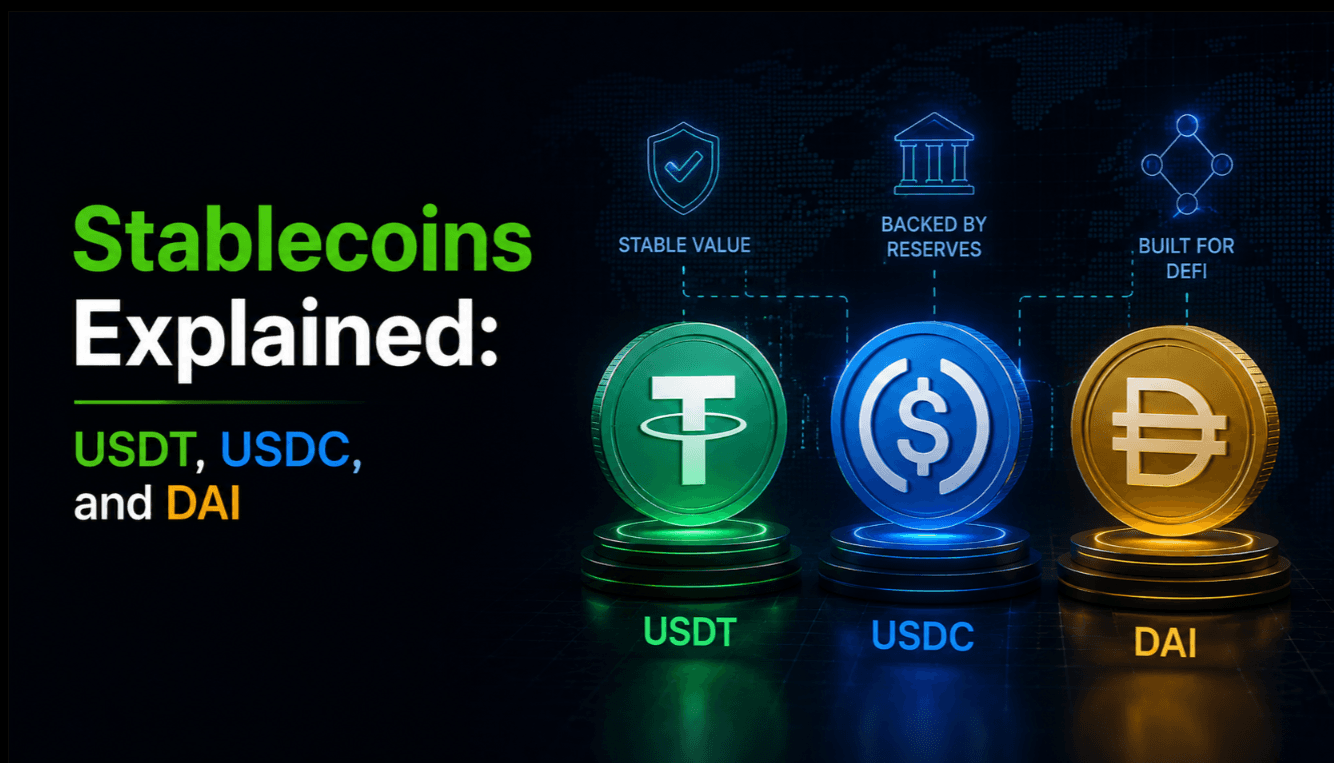
Stablecoins Explained: USDT, USDC, and DAI
Stablecoins aim to hold a steady value, usually one US dollar, so crypto users can move and store money without volatility. Here is how USDT, USDC, and DAI differ.
Olivia Bennett · June 4, 2026→