Best DeFi Protocols
Top rated: Uniswap Protocol 9.0
The base layer everything else is built on.
4rated →
Bridges connect otherwise isolated blockchains, but they have repeatedly proven to be one of DeFi's most vulnerable components. Here is what users should know.

By Olivia Bennett, Blockchain Security Researcher
Smart Contract Security, Audit Reports, Exploits, DeFi Hacks, White-Hat Research
✓ Reviewed by Emily Volker
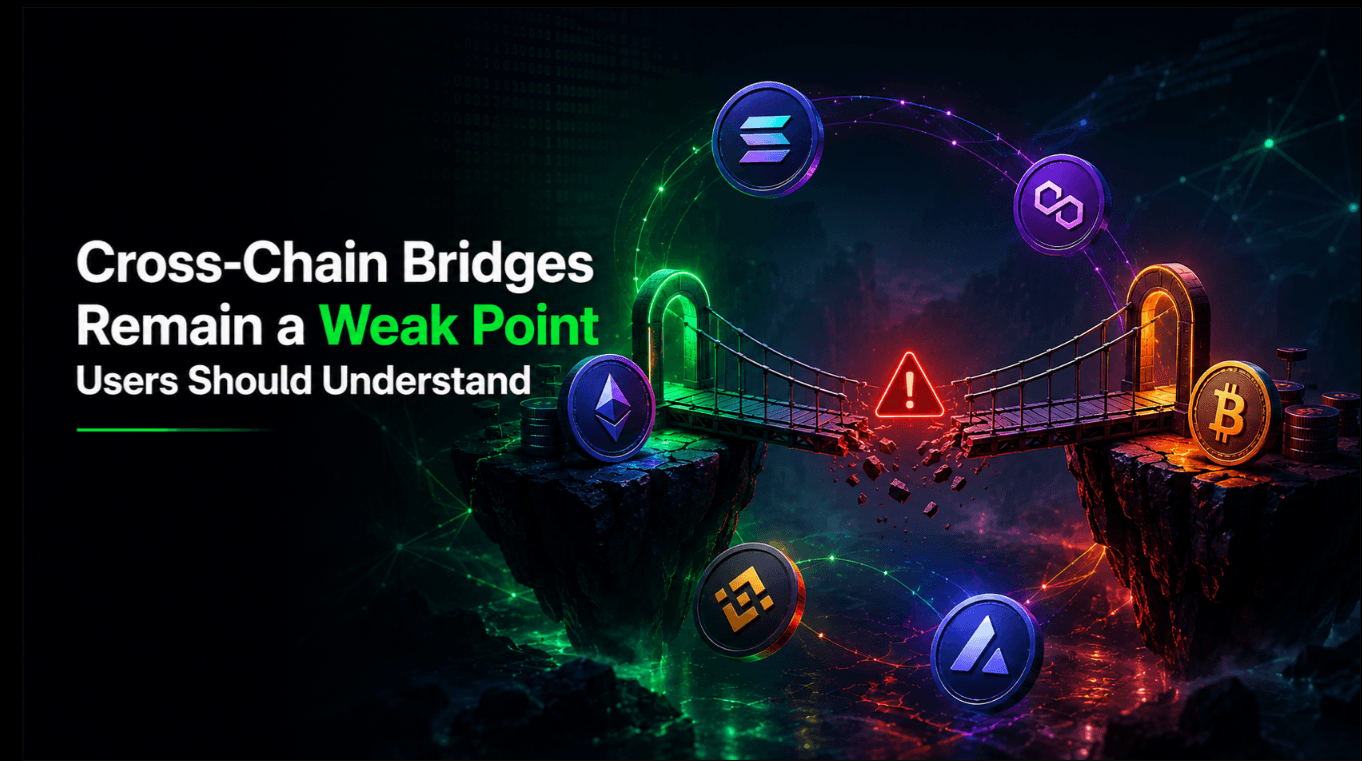
As DeFi spread across many blockchains, users needed a way to move assets between networks that do not naturally talk to each other. Cross-chain bridges fill that gap, letting value travel from one chain to another so it can be used in a different ecosystem. They are essential infrastructure, but they have also been among the most frequently exploited parts of DeFi, which makes understanding them important for anyone moving assets around.
Blockchains are generally isolated systems with no built-in awareness of one another. A bridge works around this by locking or holding an asset on the source chain and issuing a representative token on the destination chain. When you bridge back, the process reverses. This design means a bridge typically holds large pools of assets to back the representations it issues, concentrating significant value in one place.
That concentration is exactly what makes bridges attractive targets. A flaw in the bridge's contracts or in how it verifies messages between chains can let an attacker mint or release assets they should not control, with the locked reserves as the prize.
Bridges are technically demanding to build securely because they must coordinate trust across independent systems. They combine complex smart contracts, message-passing between chains, and often some set of validators or signers, and each of those components is a potential point of failure. The combination of high complexity and concentrated value has repeatedly proven costly.
Bridges are sometimes unavoidable, but you can reduce exposure. Favor well-established bridges with a long operating history and strong security practices, avoid leaving large amounts in bridged form longer than necessary, and bridge only what you intend to use. Where possible, consider whether a native asset on the destination chain or a centralized exchange transfer might accomplish the same goal with less smart-contract risk. Treating bridging as a deliberate step rather than a routine click goes a long way toward staying safe.
Written by
Olivia BennettBlockchain Security ResearcherOlivia Bennett is the Blockchain Security Researcher at CoinRadar Daily, where she specializes in smart contract security, DeFi risk analysis, blockchain infrastructure, and protocol vulnerabilities. Drawing on years of hands-on cybersecurity experience, she delivers in-depth reporting that explains both the technical details and the real-world implications of security incidents across the digital asset ecosystem. Before joining CoinRadar Daily, Olivia built her career in cybersecurity, working in penetration testing, blockchain security assessments, and smart contract auditing. She participated in numerous security reviews for decentralized applications and blockchain protocols, helping identify critical vulnerabilities before they could be exploited. Her responsible disclosure work has contributed to improving the security of several major DeFi projects and protecting millions of dollars in digital assets. Olivia earned a Bachelor of Science in Computer Science from the University of Edinburgh and later completed advanced professional training in offensive security and blockchain technologies. Her combination of software security expertise and blockchain knowledge enables her to provide readers with clear, evidence-based analysis of exploits, protocol upgrades, and emerging attack vectors. At CoinRadar Daily, Olivia publishes detailed investigations into blockchain exploits, smart contract audits, cross-chain security, wallet protection, and evolving cyber threats affecting the crypto industry. She is particularly committed to translating highly technical research into practical guidance that helps investors, developers, and blockchain users better understand protocol risk and security best practices. Alongside her editorial work, Olivia contributes educational resources covering secure wallet management, decentralized finance security, and blockchain infrastructure. She also participates in industry events and technical discussions focused on strengthening Web3 security standards, supporting CoinRadar Daily's mission to provide accurate, research-driven coverage of the rapidly evolving digital asset landscape.
✓ Reviewed & edited by Emily Volker
CoinRadar Daily Newsroom · Published June 17, 2026 · Informational, not financial advice.
Independent, rubric-scored tables covering the services this defi coverage keeps running into.
Top rated: Uniswap Protocol 9.0
The base layer everything else is built on.
4rated →
Top rated: Uniswap 8.7
Swap venues where you never hand over your keys.
5rated →
Top rated: Aave 8.3
Borrow against your holdings, or lend them out.
4rated →