Bitcoin Self-Custody: Hardware Wallets, Seed Phrases & Security
Self-custody means holding your own keys. Here is how hardware wallets and seed phrases protect Bitcoin, and the security habits that prevent loss.

By James Park, NFT & Web3 Gaming Analyst
NFTs, Web3 Gaming, GameFi, Digital Collectibles, Creator Economy
✓ Reviewed by Emily Volker· Editor-in-Chief
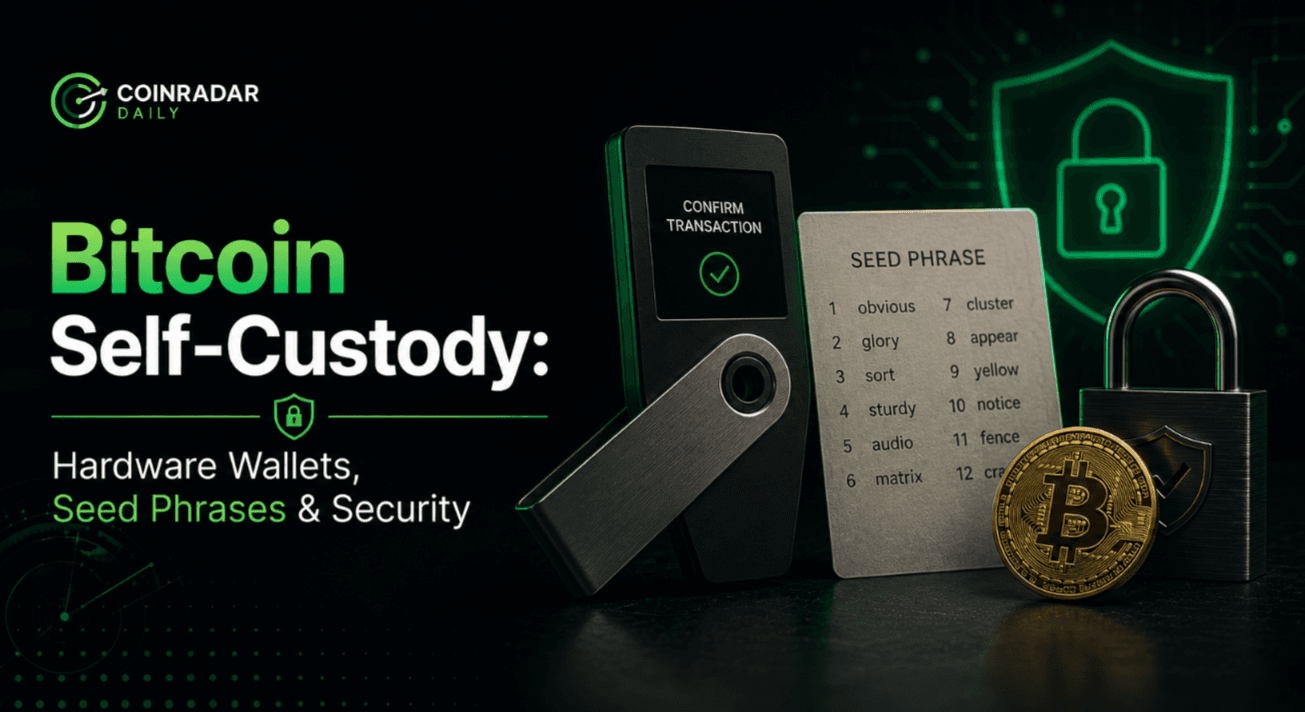
Bitcoin self-custody means holding the private keys that control your coins yourself, rather than trusting an exchange or other third party to hold them for you. In practice this usually means using a hardware wallet, a dedicated offline device that signs transactions internally, and safeguarding the recovery seed phrase it generates. Whoever controls the keys controls the bitcoin, so self-custody gives you full ownership in exchange for full responsibility for security and backups.
Key takeaways
- Self-custody puts the private keys in your hands, with no company able to freeze or lose your funds.
- A hardware wallet keeps keys offline and signs transactions without exposing them to your computer.
- The seed phrase is the master backup; anyone who reads it can take your coins.
- Confirm transaction details on the device's own screen to defeat malware on your computer.
- The trade-off for full control is full responsibility: lost keys mean permanently lost bitcoin.
What self-custody actually means
Every bitcoin is controlled by a private key, a secret number that authorizes spending. When you hold bitcoin on an exchange, the platform holds those keys and you hold a balance, much like a bank deposit. Self-custody flips this: you hold the keys directly, and no intermediary stands between you and your coins. The phrase not your keys, not your coins captures the distinction, and the failures of several custodians in recent years are why so many holders now take custody seriously.
How a hardware wallet protects you
A hardware wallet is a small dedicated device that keeps your private keys sealed inside it and never lets them leave. When you want to send bitcoin, your computer or phone prepares the transaction and passes it to the device; the device signs it internally and returns only the signature, so the key itself stays isolated. You confirm the destination address and amount on the device's own screen before approving, which is the step that defeats malware tampering with what your computer displays.
This design closes the most common attack paths at once. A keylogger cannot capture a key that is never typed, and remote malware cannot extract a key that never reaches the connected computer. The realistic remaining risks narrow to physical theft of the device combined with its PIN, and being tricked into approving a malicious transaction, both of which the on-device confirmation screen and a strong PIN are built to reduce.
Why the on-device screen matters
The most dangerous malware does not steal keys; it quietly changes the destination address right before you send. Because a hardware wallet shows the actual address and amount on its own trusted screen, you can catch this substitution by verifying the details there rather than relying on your computer. Always read the first and last characters of the address on the device itself before approving.
The seed phrase: your real backup
When you set up a self-custody wallet, it generates a recovery phrase, usually 12 or 24 words drawn from a standard list. This seed is a human-readable form of your keys, and it can restore your entire wallet on a new device if the original breaks, is lost, or is stolen. The same property makes it the single most sensitive thing you own: anyone who reads the words can recreate your wallet and take everything in it.
- Write the seed on paper or stamp it into metal; never store it as a photo or a text file.
- Keep at least one backup in a separate physical location to survive fire, flood, or theft.
- Never type your seed into a website or app, and never share it with anyone claiming to be support.
- Consider an optional passphrase as a 25th word for an extra layer, but only if you will not forget it.
A backup you have never restored from is not a backup, it is a hope. Test recovery before you trust it with real money. — CoinRadar Daily analysis
The threats self-custody is designed to stop
Self-custody done well neutralizes the threats that cause most cryptocurrency losses. It removes counterparty risk, since no exchange can be hacked or fail with your coins inside it. It removes remote key theft, since the keys never touch an internet-connected machine. And it puts the final confirmation in your hands, so an attacker generally needs to fool you directly rather than simply breach a company. The threats that remain are largely about your own operational security.
Where users still go wrong
- Entering a seed phrase into a fake wallet or a phishing website that imitates a real one.
- Buying a hardware wallet from an unofficial reseller that may have tampered with it.
- Approving a transaction without reading the address on the device's screen.
- Storing the only seed backup in one place, where a single fire or theft destroys access forever.
Advanced setups: passphrases and multisig
For larger holdings, two techniques add resilience beyond a single device and seed. A passphrase adds a secret word on top of the seed, so even someone who finds your written backup cannot access the funds without it, effectively creating a hidden wallet. Multi-signature, or multisig, requires several independent keys to approve any transaction, so no single device, location, or person represents a single point of failure.
These setups trade simplicity for safety. A passphrase you forget is as unrecoverable as a lost seed, and a poorly documented multisig arrangement can confuse your future self or your heirs. They are powerful tools for significant amounts, but only when you fully understand the recovery process and have tested it end to end.
Planning for inheritance
Self-custody has no help desk, which means coins are lost forever if your heirs cannot find and use the keys after you die or become incapacitated. A sound plan documents where backups are stored and how to recover the wallet, kept with your estate papers, without exposing the seed itself in plain sight. Some holders split a seed across trusted parties or use multisig so that a quorum can recover the funds while no single person can act alone. Whatever the approach, write it down clearly enough that a non-technical person could follow it.
A practical self-custody checklist
- Buy your hardware wallet directly from the manufacturer or an authorized seller.
- Generate and back up the seed yourself; never accept a pre-set recovery phrase.
- Store seed backups offline, in more than one location, protected from fire and water.
- Verify the receiving and sending address on the device screen before approving anything.
- Restore your wallet from the backup once, with a small amount, before committing larger funds.
This article is for general information only and is not financial, security, or legal advice. Self-custody carries real risks, including permanent and irreversible loss; evaluate your own situation and seek professional guidance for significant holdings.
Frequently asked questions
What is Bitcoin self-custody?+
Self-custody means holding the private keys to your bitcoin yourself instead of leaving them with an exchange or third party. It gives you full control, so no company can freeze or lose your funds, but it also makes you fully responsible for securing the keys and backing them up.
Why do I need a hardware wallet for self-custody?+
A hardware wallet keeps your private keys offline and signs transactions inside the device, so the keys never reach an internet-connected computer. This blocks the malware and remote-theft attacks that cause most losses, making it the standard tool for holding meaningful amounts of bitcoin.
What happens if I lose my seed phrase?+
If you lose your seed phrase and also lose access to the wallet device, your bitcoin is gone permanently, with no password reset or support line able to recover it. That is why multiple secure, offline backups of the seed phrase are essential before you fund a self-custody wallet.
Is a passphrase the same as a seed phrase?+
No. The seed phrase is the master backup that restores your wallet. An optional passphrase is an extra secret word added on top of the seed, creating a hidden wallet that cannot be accessed by the seed alone. If you use one and forget it, the funds become unrecoverable.
Is self-custody safer than keeping Bitcoin on an exchange?+
For most threats, yes, because it removes counterparty risk and remote key theft. But it shifts responsibility entirely to you. Done carelessly, with no backups or poor security habits, self-custody can be riskier than a reputable exchange. Done well, it is the more secure choice for long-term holdings.
Written by
James ParkNFT & Web3 Gaming AnalystNFTs, Web3 Gaming, GameFi, Digital Collectibles, Creator Economy
James Park serves as the NFT & Web3 Gaming Analyst at CoinRadar Daily, where he covers the rapidly evolving worlds of blockchain gaming, digital collectibles, metaverse ecosystems, and creator-driven economies. Combining expertise in interactive media with blockchain technology, he analyzes how NFTs and decentralized gaming continue to reshape digital ownership and online communities. James earned a Master of Fine Arts in Digital Media from NYU Tisch School of the Arts, giving him a unique perspective that blends creative storytelling, digital culture, and emerging technology. Rather than viewing NFTs solely through an investment lens, he examines their broader impact on entertainment, gaming, intellectual property, and community engagement. Prior to joining CoinRadar Daily, James reported on the NFT industry and blockchain gaming for several leading digital media outlets, covering the explosive growth of the NFT market, the transition toward utility-focused collections, and the evolution of GameFi. His close relationships with independent developers, digital artists, and gaming communities allow him to identify important industry trends long before they reach mainstream attention. His reporting places particular emphasis on sustainable Web3 game design, token economies, and the long-term viability of blockchain-powered virtual worlds. James has published extensive research analyzing why certain gaming ecosystems thrive while others struggle with inflationary token models, weak player retention, or unsustainable reward structures. His market analysis is frequently referenced by blockchain startups, investors, and game studios evaluating new Web3 projects. Beyond journalism, James actively participates in NFT and decentralized creator communities while following developments in digital art, virtual economies, and next-generation gaming technologies. He also contributes educational content on blockchain gaming and regularly speaks about the future of digital ownership, helping CoinRadar Daily deliver balanced, research-driven coverage at the intersection of technology, gaming, and crypto innovation.

✓Reviewed & edited by
Emily VolkerEditor-in-ChiefEditorial Strategy, Investigative Journalism, Crypto Media, E-E-A-T Standards
Emily Volker is the Editor-in-Chief of CoinRadar Daily, where she leads a multilingual editorial team covering cryptocurrency markets, blockchain innovation, Web3, and global digital asset regulation across eight languages. With more than a decade of experience in financial and technology journalism, she has played a key role in developing high editorial standards and trusted reporting within the digital asset industry. Emily began her career as a financial journalist reporting on commodities, energy markets, and emerging technologies before discovering Bitcoin and decentralized finance in the early 2010s. She later moved to London to join one of Europe's early blockchain-focused media organizations, where she advanced into senior editorial leadership. Her experience reporting through both the rapid expansion of the 2017 ICO boom and the subsequent market correction reinforced her commitment to fact-based, research-driven journalism in an industry often influenced by speculation. She holds a Master's degree in International Journalism from City, University of London, and has completed executive studies in digital media strategy through the Reuters Institute at Oxford. Emily is a strong advocate for editorial transparency, rigorous verification, and responsible financial reporting. She also helped integrate Google's E-E-A-T principles—Experience, Expertise, Authoritativeness, and Trustworthiness—into the editorial standards followed by CoinRadar Daily. Under her leadership, CoinRadar Daily has expanded into a global cryptocurrency news platform publishing content in eight languages with a network of editors, analysts, and contributors across four continents. Emily oversees investigative reporting, editorial policy, content quality, and fact-checking processes to ensure every article meets the publication's standards for accuracy, credibility, and independence. Alongside her editorial responsibilities, Emily mentors aspiring journalists through digital media initiatives and regularly speaks at international conferences focused on journalism, fintech, blockchain technology, and digital assets, where she discusses responsible reporting, combating misinformation, and the evolving future of financial media.
CoinRadar Daily content is written by named analysts and checked against our editorial standards. Market data is indicative and informational only — nothing here is financial advice.
Bitcoin services, rated
How we score →Independent, rubric-scored tables covering the services this bitcoin coverage keeps running into.
Best Hardware Wallets
Top rated: Trezor Safe 5 8.6
Devices whose only job is to keep a key away from the internet.
5rated →
Best Crypto Wallets
Top rated: Rabby 8.4
Software wallets for everyday use.
5rated →
Best Crypto Exchanges
Top rated: Kraken 8.6
Centralised venues that hold your funds while you trade.
6rated →
Keep Reading

What Is a Spot Bitcoin ETF and How Does It Work?
A spot Bitcoin ETF holds actual bitcoin and lets investors gain exposure through a brokerage account. Here is how it works and what you give up.
Emily Volker · June 1, 2026→

Bitcoin vs Gold: Which Is the Better Store of Value?
Bitcoin is often called digital gold, but the two assets store value very differently. Here is how they compare on scarcity, volatility, and risk.
Olivia Bennett · June 5, 2026→
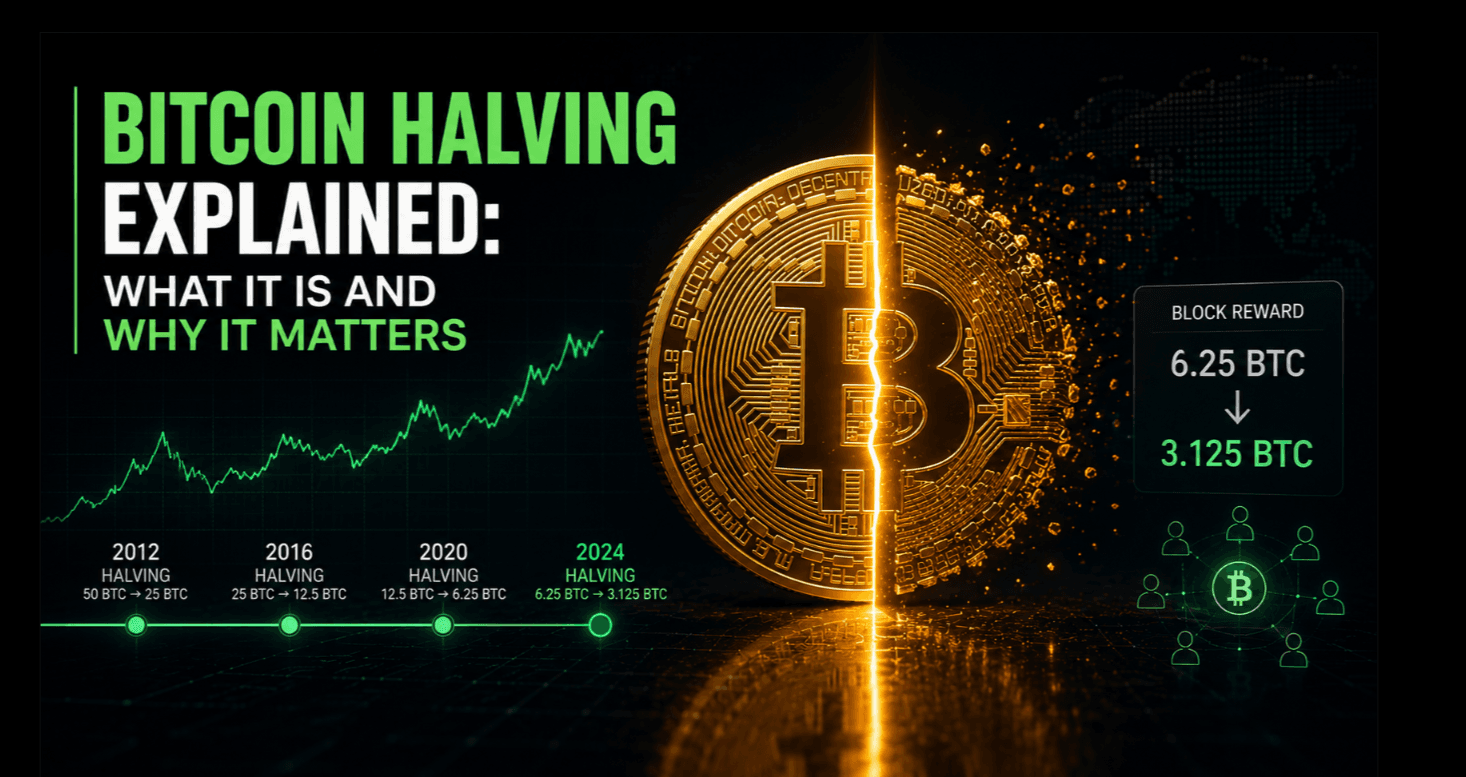
Bitcoin Halving Explained: What It Is and Why It Matters
Roughly every four years Bitcoin halves the reward paid to miners, slowing new supply. Here is how the halving works and why investors pay attention.
James Park · June 16, 2026→