How Crypto Taxes Generally Work: A Beginner's Guide
Selling, swapping, spending or earning crypto can create a tax bill. Here is how the main concepts work and why your records matter more than you think.

By James Park, NFT & Web3 Gaming Analyst
NFTs, Web3 Gaming, GameFi, Digital Collectibles, Creator Economy
✓ Reviewed by Emily Volker· Editor-in-Chief

In most countries crypto is treated as property or as an asset rather than as ordinary currency, which means many things you do with it can trigger tax. The two questions that decide your bill are usually whether a transaction was a taxable event and, if so, whether the result counts as a capital gain or as income. Selling, swapping one token for another, spending crypto on goods, and earning it through work, staking or interest can all matter, while simply holding or moving coins between your own wallets generally does not. This article describes how these rules tend to work in general; it is not tax advice, and the specifics differ sharply by country, so confirm your own situation with a qualified professional.
Key takeaways
- Crypto is commonly taxed as property, so disposing of it can create a capital gain or loss.
- Earning crypto, through pay, staking, mining or rewards, is often taxed as income at the value when received.
- Buying crypto with cash and holding it, or moving it between your own wallets, usually is not taxable.
- Your gain is the disposal value minus your cost basis, which is what you paid plus allowable fees.
- Good records are the single most important habit; without them, calculating tax accurately is very hard.
What counts as a taxable event
A taxable event is simply an action the tax authority treats as a moment to measure gain, loss or income. The exact list varies, but several events recur across jurisdictions.
- Selling crypto for cash.
- Swapping one crypto for another, which often counts as disposing of the first asset.
- Spending crypto to buy goods or services.
- Receiving crypto as payment, rewards, staking yield, mining output or an airdrop.
Notice that a crypto-to-crypto swap can be taxable even though no traditional money changed hands. This surprises many newcomers and is a common source of unexpected bills.
Capital gains versus income
The distinction between capital gains and income runs through almost every crypto tax system. When you dispose of an asset you already own, the profit or loss is usually a capital matter. When you receive new crypto in return for activity or as a reward, the value at the time you receive it is usually income.
Capital gains
A capital gain is the difference between what you receive on disposal and your cost basis. Many countries treat assets held longer than a set period more favorably than short-term holdings, so the timing of a sale can change the rate that applies.
Income
Crypto earned through work, staking, lending or similar activity is generally valued in your local currency on the day you gain control of it, and that value is taxed as income. The same amount then becomes the cost basis for any future disposal, which is why the same coins can touch two tax categories over their life.
Cost basis and why it decides your bill
Cost basis is what an asset cost you, typically the purchase price plus fees, or its market value when you received it as income. Gains and losses are measured against this number, so an inaccurate basis means an inaccurate tax return. When you have bought the same coin many times at different prices, you also need a method to decide which units you sold, and the method allowed differs by country.
The difference between a clean crypto tax return and a stressful one is almost never the math. It is whether you kept the records. — CoinRadar Daily desk note
Losses, deductions and offsets
Losses are not only bad news. In many systems a capital loss can offset capital gains, and sometimes a portion can be carried to future years. Transaction fees may be deductible as part of your basis or your disposal proceeds. These reliefs come with conditions and limits, however, and abusing them, for example by selling and instantly rebuying purely to book a loss, may be restricted.
How to stay organized
Because exchanges, wallets and chains rarely speak to one another, the burden of assembling a complete picture falls on you. A few habits prevent most problems.
- Record every transaction with date, amount, value in your local currency, and fees.
- Keep exports from every exchange and a list of the wallets you control.
- Track income separately from disposals so you do not double count or miss either.
- Consider tax software or a professional once your activity grows beyond a handful of trades.
Tax authorities increasingly receive data directly from exchanges, so the gap between what you report and what they already know is shrinking. Reporting accurately, keeping evidence, and asking a qualified advisor about your specific circumstances is the dependable path; this overview is a starting point, not a filing strategy.
Frequently asked questions
Do I owe tax if I only buy and hold crypto?+
Generally no. In most systems buying crypto with cash and holding it is not a taxable event. Tax tends to arise when you dispose of it by selling, swapping or spending, or when you earn new crypto, which is often treated as income.
Is swapping one coin for another taxable?+
In many countries yes. A crypto-to-crypto swap is often treated as disposing of the first asset and acquiring the second, which can create a capital gain or loss even though no traditional cash changed hands.
How is staking or mining income taxed?+
Rewards from staking, mining or similar activity are commonly taxed as income at their market value when you receive them. That value usually becomes your cost basis, so a later sale can also produce a separate capital gain or loss.
What records should I keep for crypto taxes?+
Keep the date, amount, local-currency value and fees for every transaction, plus exchange exports and a list of your wallets. Complete records make it possible to calculate cost basis and gains accurately and to support your figures if questioned.
Can crypto losses reduce my tax?+
Often they can. Many systems let capital losses offset capital gains, and sometimes carry forward to later years. Rules and limits vary widely, and some anti-avoidance restrictions apply, so check the specifics for your jurisdiction with a professional.
Written by
James ParkNFT & Web3 Gaming AnalystNFTs, Web3 Gaming, GameFi, Digital Collectibles, Creator Economy
James Park serves as the NFT & Web3 Gaming Analyst at CoinRadar Daily, where he covers the rapidly evolving worlds of blockchain gaming, digital collectibles, metaverse ecosystems, and creator-driven economies. Combining expertise in interactive media with blockchain technology, he analyzes how NFTs and decentralized gaming continue to reshape digital ownership and online communities. James earned a Master of Fine Arts in Digital Media from NYU Tisch School of the Arts, giving him a unique perspective that blends creative storytelling, digital culture, and emerging technology. Rather than viewing NFTs solely through an investment lens, he examines their broader impact on entertainment, gaming, intellectual property, and community engagement. Prior to joining CoinRadar Daily, James reported on the NFT industry and blockchain gaming for several leading digital media outlets, covering the explosive growth of the NFT market, the transition toward utility-focused collections, and the evolution of GameFi. His close relationships with independent developers, digital artists, and gaming communities allow him to identify important industry trends long before they reach mainstream attention. His reporting places particular emphasis on sustainable Web3 game design, token economies, and the long-term viability of blockchain-powered virtual worlds. James has published extensive research analyzing why certain gaming ecosystems thrive while others struggle with inflationary token models, weak player retention, or unsustainable reward structures. His market analysis is frequently referenced by blockchain startups, investors, and game studios evaluating new Web3 projects. Beyond journalism, James actively participates in NFT and decentralized creator communities while following developments in digital art, virtual economies, and next-generation gaming technologies. He also contributes educational content on blockchain gaming and regularly speaks about the future of digital ownership, helping CoinRadar Daily deliver balanced, research-driven coverage at the intersection of technology, gaming, and crypto innovation.

✓Reviewed & edited by
Emily VolkerEditor-in-ChiefEditorial Strategy, Investigative Journalism, Crypto Media, E-E-A-T Standards
Emily Volker is the Editor-in-Chief of CoinRadar Daily, where she leads a multilingual editorial team covering cryptocurrency markets, blockchain innovation, Web3, and global digital asset regulation across eight languages. With more than a decade of experience in financial and technology journalism, she has played a key role in developing high editorial standards and trusted reporting within the digital asset industry. Emily began her career as a financial journalist reporting on commodities, energy markets, and emerging technologies before discovering Bitcoin and decentralized finance in the early 2010s. She later moved to London to join one of Europe's early blockchain-focused media organizations, where she advanced into senior editorial leadership. Her experience reporting through both the rapid expansion of the 2017 ICO boom and the subsequent market correction reinforced her commitment to fact-based, research-driven journalism in an industry often influenced by speculation. She holds a Master's degree in International Journalism from City, University of London, and has completed executive studies in digital media strategy through the Reuters Institute at Oxford. Emily is a strong advocate for editorial transparency, rigorous verification, and responsible financial reporting. She also helped integrate Google's E-E-A-T principles—Experience, Expertise, Authoritativeness, and Trustworthiness—into the editorial standards followed by CoinRadar Daily. Under her leadership, CoinRadar Daily has expanded into a global cryptocurrency news platform publishing content in eight languages with a network of editors, analysts, and contributors across four continents. Emily oversees investigative reporting, editorial policy, content quality, and fact-checking processes to ensure every article meets the publication's standards for accuracy, credibility, and independence. Alongside her editorial responsibilities, Emily mentors aspiring journalists through digital media initiatives and regularly speaks at international conferences focused on journalism, fintech, blockchain technology, and digital assets, where she discusses responsible reporting, combating misinformation, and the evolving future of financial media.
CoinRadar Daily content is written by named analysts and checked against our editorial standards. Market data is indicative and informational only — nothing here is financial advice.
Regulation services, rated
How we score →Independent, rubric-scored tables covering the services this regulation coverage keeps running into.
Best Stablecoins
Top rated: USDC 8.4
A stablecoin is a promise about redemption.
4rated →
Best Crypto Cards
Top rated: Gnosis Pay 7.8
Spend crypto at the till.
4rated →
Best Crypto Exchanges
Top rated: Kraken 8.6
Centralised venues that hold your funds while you trade.
6rated →
Keep Reading

Security or Commodity? How Regulators Classify Crypto
Whether a token is a security or a commodity decides which rules apply and who supervises it. Here is how regulators draw that line and why it is so contested.
James Park · May 22, 2026→
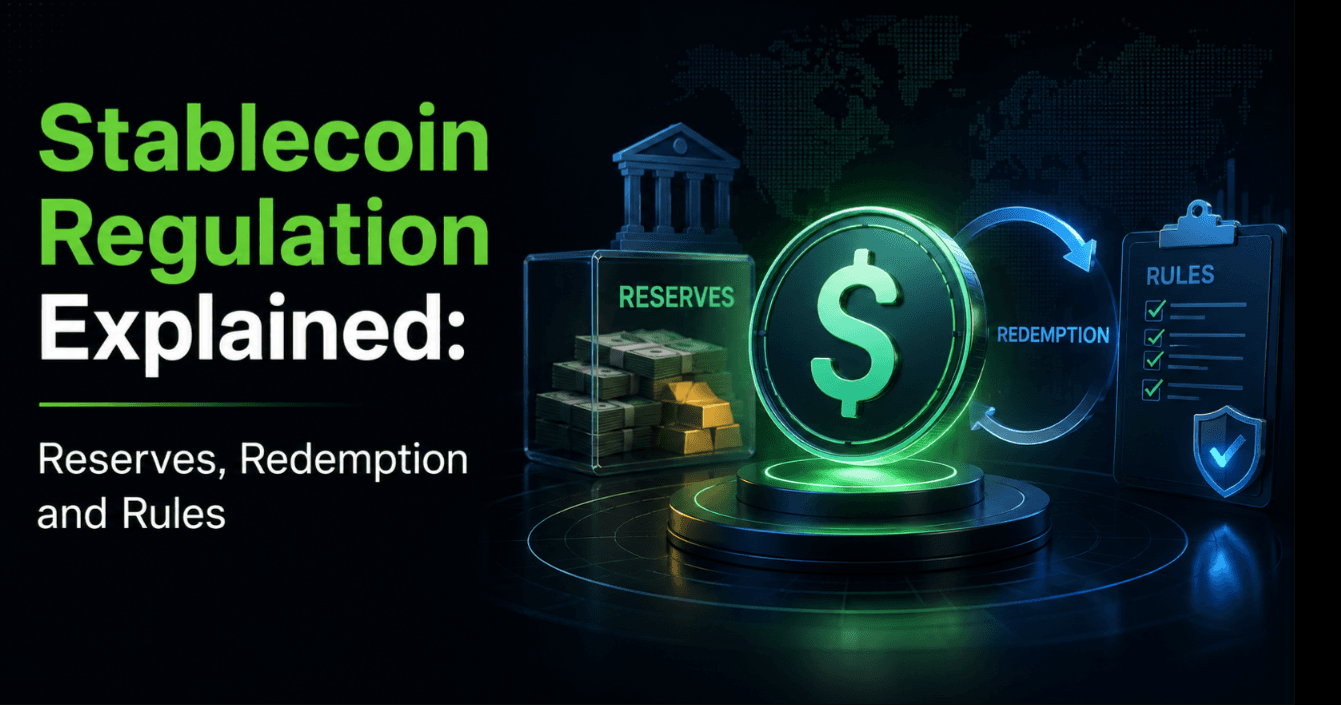
Stablecoin Regulation Explained: Reserves, Redemption and Rules
Stablecoins promise a steady value, and that promise is exactly what regulators scrutinize. Here is how stablecoin rules tend to work and why reserves sit at the center.
Emily Volker · May 26, 2026→
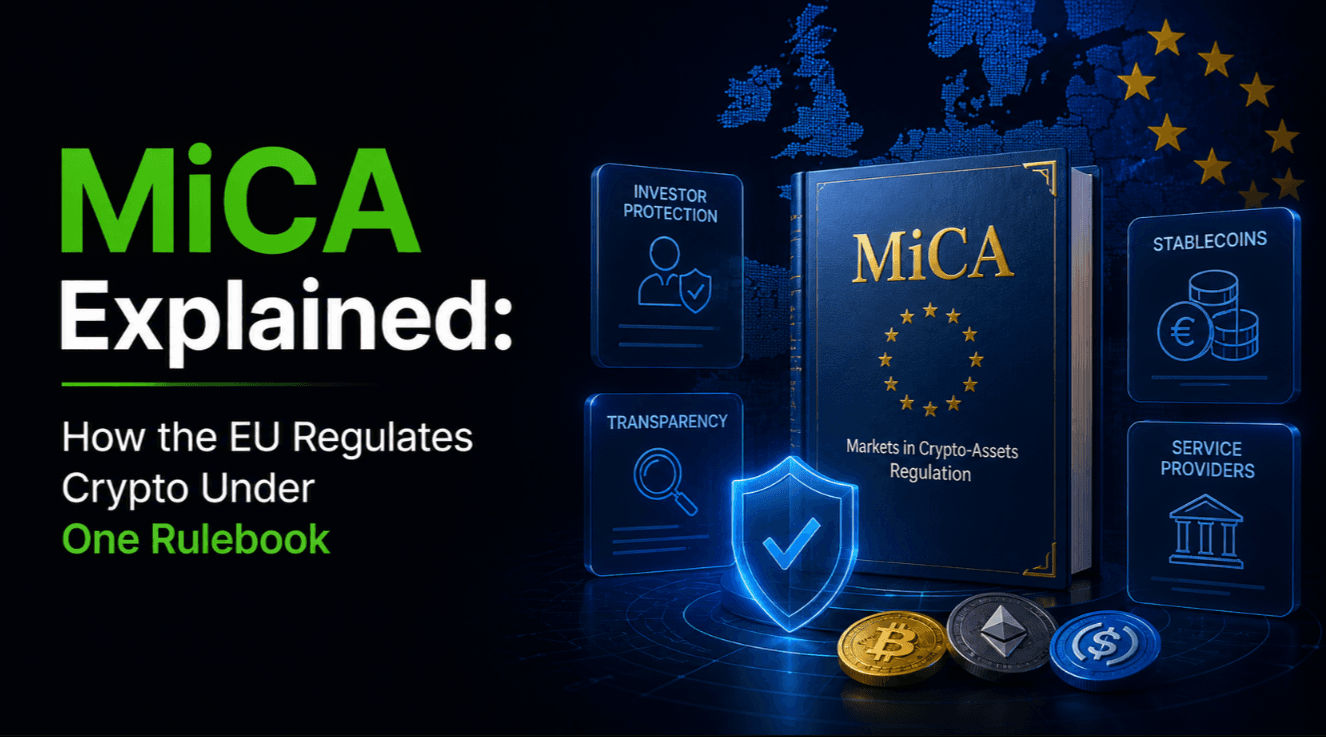
MiCA Explained: How the EU Regulates Crypto Under One Rulebook
MiCA gives the European Union a single framework for crypto-assets and the firms that service them. Here is what it covers and why it changed the game in Europe.
Olivia Bennett · June 3, 2026→