How to Read On-Chain Metrics: A Practical Guide
On-chain data turns a public blockchain into a window on real user behaviour. Here is how to read the core metrics, and how to avoid drawing the wrong conclusions from them.

By James Park, NFT & Web3 Gaming Analyst
NFTs, Web3 Gaming, GameFi, Digital Collectibles, Creator Economy
✓ Reviewed by Olivia Bennett· Blockchain Security Researcher
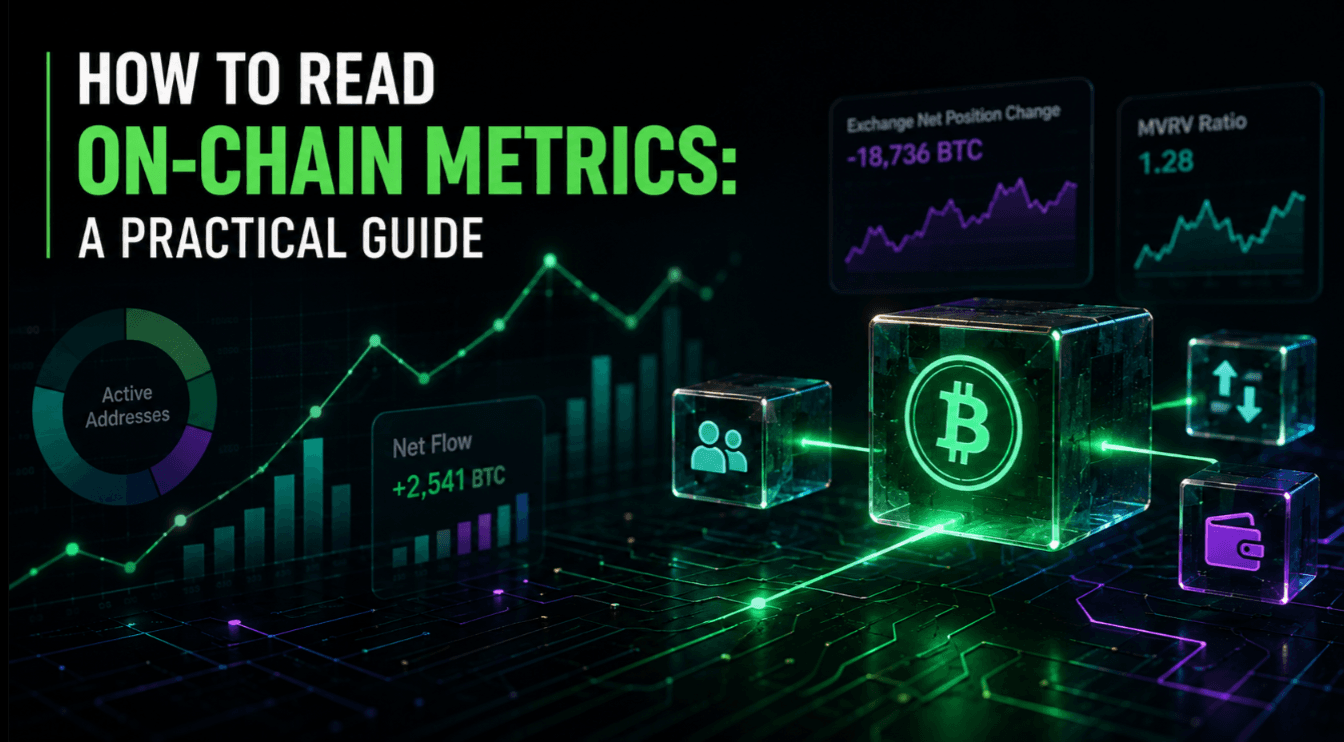
On-chain metrics are measurements derived directly from blockchain transaction data, and they let you observe how a network is actually being used rather than relying on price alone. Because public blockchains record every transfer, you can track things like how many addresses are active, how much value is moving, and whether coins are flowing toward or away from exchanges. Read carefully, these signals add context that charts and headlines cannot, but they are easy to misinterpret without an understanding of what each one measures.
Key takeaways
- On-chain metrics describe network activity using data recorded directly on the blockchain.
- Active addresses and transaction counts gauge usage, but can be distorted by automation and batching.
- Exchange inflows and outflows hint at intent to sell or hold, not guaranteed price moves.
- Realised value and holder cohorts help separate long-term conviction from short-term speculation.
- No single metric is decisive; context and corroboration matter more than any one number.
Why on-chain data is useful
Traditional markets hide most participant behaviour behind closed brokerage systems. Public blockchains do the opposite: the ledger is open, so anyone can study the flow of funds. This transparency means on-chain analysis can sometimes reveal stress, accumulation, or distribution before it shows up clearly in price. The catch is that raw data needs interpretation, and the same number can support very different stories.
Core metrics worth knowing
Active addresses and transaction counts
Active addresses measure how many unique addresses participate over a period, while transaction counts measure how much activity occurs. Rising trends can signal growing usage, but both can be inflated by exchanges batching transfers, bots, or a single user controlling many addresses. Treat them as directional health checks rather than precise user counts.
Exchange flows
Exchange inflows track coins moving onto trading platforms, which is often associated with intent to sell, while outflows track coins moving to private wallets, often associated with longer-term holding. These are tendencies, not rules. Large flows can reflect custody changes, internal transfers, or operational moves that have nothing to do with an immediate trading decision.
Realised value and holder cohorts
Realised value estimates the aggregate price at which coins last moved, offering a sense of the network's cost basis. Combined with cohort analysis, which groups holders by how long they have held, it can show whether long-term holders are accumulating or distributing. These metrics are among the most useful for gauging conviction across the market.
On-chain data answers what happened on the network, not what will happen to the price. Confusing the two is the most common mistake. — CoinRadar Daily research desk
Common pitfalls to avoid
The biggest error is treating any single metric as a buy or sell signal. On-chain numbers are noisy, and many have well-known distortions. Address counts can be gamed, exchange flows can be misclassified, and methodology differs between data providers, which means two dashboards can show different values for the same idea. Always check how a metric is defined before acting on it.
Another pitfall is ignoring context. A spike in exchange inflows during a calm market means something different from the same spike during a panic. The most reliable approach is to read several metrics together and look for a coherent story rather than cherry-picking the one that fits your existing view.
Building a simple workflow
- Start with usage metrics to gauge whether network activity is rising or fading.
- Layer in exchange flows to sense whether the market is leaning toward holding or selling.
- Use realised value and holder cohorts to understand conviction beneath the surface.
- Corroborate across at least two data sources before drawing firm conclusions.
On-chain analysis rewards patience and scepticism. It is most powerful as a way to confirm or challenge a thesis you have built from other evidence, not as a standalone crystal ball. This article is educational and not financial advice; blockchain data can mislead as easily as it can inform, so weigh it alongside your own research and risk tolerance.
Frequently asked questions
Do I need to run my own node to read on-chain metrics?+
No. Several analytics platforms aggregate and visualise on-chain data so you can study it without running infrastructure. Running a node gives you direct access but is unnecessary for most investors who simply want to interpret published metrics.
Are on-chain metrics reliable indicators of price?+
They describe network behaviour, not future price. Some metrics correlate loosely with price over time, but none predict it dependably. They are best used to add context and test a thesis rather than as standalone trade signals.
Why do different platforms show different on-chain numbers?+
Each provider uses its own methodology for filtering, labelling addresses, and counting activity. These differences can produce meaningfully different values for the same concept, so it helps to understand each platform's definitions before comparing figures.
What is the single most useful on-chain metric for beginners?+
There is no single best metric, but exchange flows and active addresses are accessible starting points. The greater value comes from reading several metrics together rather than relying on any one in isolation.
Written by
James ParkNFT & Web3 Gaming AnalystNFTs, Web3 Gaming, GameFi, Digital Collectibles, Creator Economy
James Park serves as the NFT & Web3 Gaming Analyst at CoinRadar Daily, where he covers the rapidly evolving worlds of blockchain gaming, digital collectibles, metaverse ecosystems, and creator-driven economies. Combining expertise in interactive media with blockchain technology, he analyzes how NFTs and decentralized gaming continue to reshape digital ownership and online communities. James earned a Master of Fine Arts in Digital Media from NYU Tisch School of the Arts, giving him a unique perspective that blends creative storytelling, digital culture, and emerging technology. Rather than viewing NFTs solely through an investment lens, he examines their broader impact on entertainment, gaming, intellectual property, and community engagement. Prior to joining CoinRadar Daily, James reported on the NFT industry and blockchain gaming for several leading digital media outlets, covering the explosive growth of the NFT market, the transition toward utility-focused collections, and the evolution of GameFi. His close relationships with independent developers, digital artists, and gaming communities allow him to identify important industry trends long before they reach mainstream attention. His reporting places particular emphasis on sustainable Web3 game design, token economies, and the long-term viability of blockchain-powered virtual worlds. James has published extensive research analyzing why certain gaming ecosystems thrive while others struggle with inflationary token models, weak player retention, or unsustainable reward structures. His market analysis is frequently referenced by blockchain startups, investors, and game studios evaluating new Web3 projects. Beyond journalism, James actively participates in NFT and decentralized creator communities while following developments in digital art, virtual economies, and next-generation gaming technologies. He also contributes educational content on blockchain gaming and regularly speaks about the future of digital ownership, helping CoinRadar Daily deliver balanced, research-driven coverage at the intersection of technology, gaming, and crypto innovation.

✓Reviewed & edited by
Olivia BennettBlockchain Security ResearcherSmart Contract Security, Audit Reports, Exploits, DeFi Hacks, White-Hat Research
Olivia Bennett is the Blockchain Security Researcher at CoinRadar Daily, where she specializes in smart contract security, DeFi risk analysis, blockchain infrastructure, and protocol vulnerabilities. Drawing on years of hands-on cybersecurity experience, she delivers in-depth reporting that explains both the technical details and the real-world implications of security incidents across the digital asset ecosystem. Before joining CoinRadar Daily, Olivia built her career in cybersecurity, working in penetration testing, blockchain security assessments, and smart contract auditing. She participated in numerous security reviews for decentralized applications and blockchain protocols, helping identify critical vulnerabilities before they could be exploited. Her responsible disclosure work has contributed to improving the security of several major DeFi projects and protecting millions of dollars in digital assets. Olivia earned a Bachelor of Science in Computer Science from the University of Edinburgh and later completed advanced professional training in offensive security and blockchain technologies. Her combination of software security expertise and blockchain knowledge enables her to provide readers with clear, evidence-based analysis of exploits, protocol upgrades, and emerging attack vectors. At CoinRadar Daily, Olivia publishes detailed investigations into blockchain exploits, smart contract audits, cross-chain security, wallet protection, and evolving cyber threats affecting the crypto industry. She is particularly committed to translating highly technical research into practical guidance that helps investors, developers, and blockchain users better understand protocol risk and security best practices. Alongside her editorial work, Olivia contributes educational resources covering secure wallet management, decentralized finance security, and blockchain infrastructure. She also participates in industry events and technical discussions focused on strengthening Web3 security standards, supporting CoinRadar Daily's mission to provide accurate, research-driven coverage of the rapidly evolving digital asset landscape.
CoinRadar Daily content is written by named analysts and checked against our editorial standards. Market data is indicative and informational only — nothing here is financial advice.
Markets services, rated
How we score →Independent, rubric-scored tables covering the services this markets coverage keeps running into.
Best Crypto Exchanges
Top rated: Kraken 8.6
Centralised venues that hold your funds while you trade.
6rated →
Best Perpetual DEXs
Top rated: Hyperliquid 8.3
On-chain leverage.
5rated →
Best Crypto Trading Tools
Top rated: DefiLlama 8.7
Terminals, bots, screeners and portfolio trackers.
4rated →
Keep Reading

Risk Management for Crypto Investors: Sizing and Stops
Returns get the attention, but risk management decides who survives. Here is how position sizing, stop-losses, and sensible limits keep you in the game.
James Park · May 19, 2026→
Bull vs Bear Market: The Signals Worth Watching
Telling a bull market from a bear is easy in hindsight and hard in the moment. These are the signals that help you read the broader trend without chasing noise.
Emily Volker · May 26, 2026→
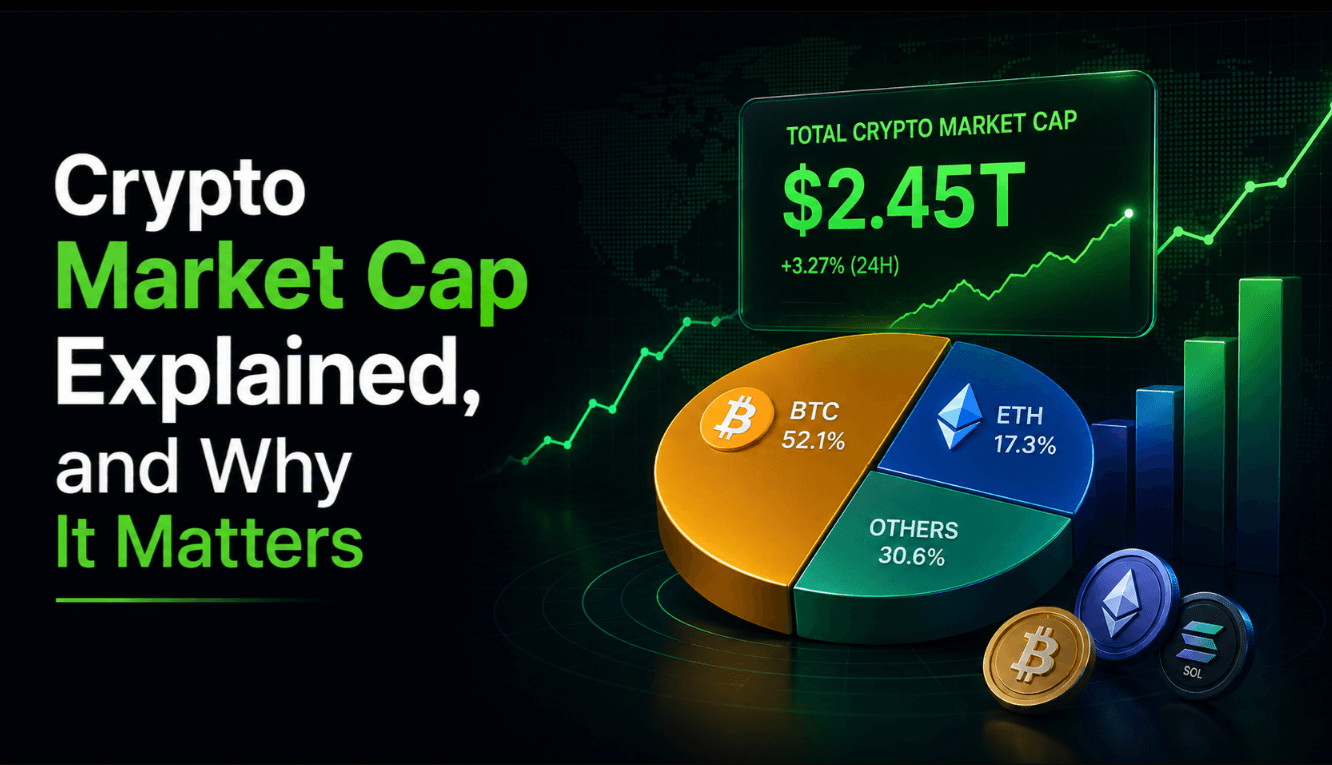
Crypto Market Cap Explained, and Why It Matters
Market cap is the headline number everyone quotes, but few use it correctly. Here is how it is calculated, what it really tells you, and where it can be misleading.
Olivia Bennett · June 1, 2026→