Risk Management for Crypto Investors: Sizing and Stops
Returns get the attention, but risk management decides who survives. Here is how position sizing, stop-losses, and sensible limits keep you in the game.

By James Park, NFT & Web3 Gaming Analyst
NFTs, Web3 Gaming, GameFi, Digital Collectibles, Creator Economy
✓ Reviewed by Emily Volker· Editor-in-Chief
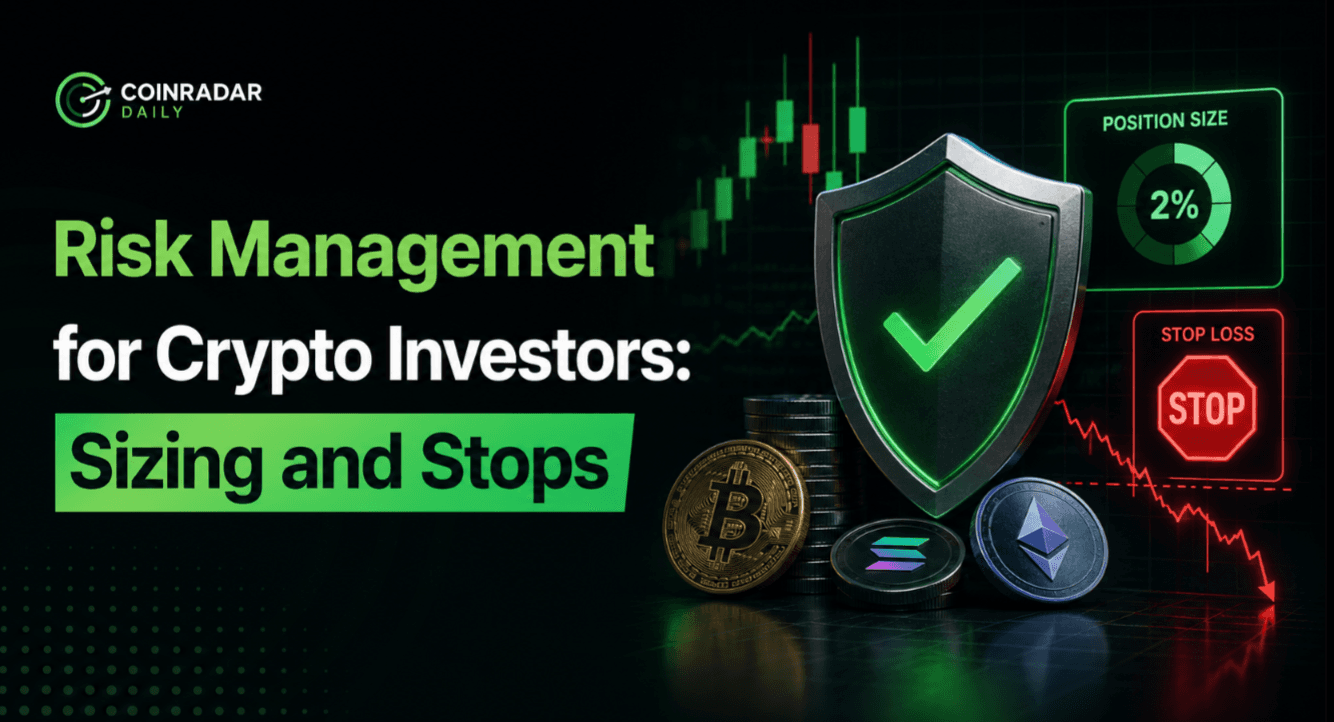
Risk management in crypto is the discipline of controlling how much you can lose on any position and across your portfolio, so that no single mistake or market shock can take you out of the game. It rests on a few practical tools: sizing positions according to a fixed risk budget, defining exits before you enter, and capping total exposure. In a market as volatile as crypto, protecting capital is not a defensive afterthought; it is the foundation that makes long-term returns possible at all.
Key takeaways
- Risk management protects capital so a single loss cannot end your participation.
- Position sizing should be based on how much you are willing to lose, not how much you hope to gain.
- Stop-losses define your exit before emotion takes over, but they are not foolproof.
- Portfolio-level limits prevent overexposure to any one asset or correlated theme.
- Surviving drawdowns matters more than maximising any individual trade.
Why risk management comes first
The mathematics of losses is unforgiving. A fifty percent loss requires a one hundred percent gain just to break even, and crypto routinely delivers drawdowns of that scale or worse. This asymmetry is why protecting capital outranks chasing returns. Investors who blow up rarely do so because they lacked good ideas; they do so because a few oversized positions or a refusal to cut losses wiped out everything else.
Position sizing
Position sizing answers the most important question before any trade: how much can I afford to lose on this? A common framework is to risk only a small, fixed percentage of your portfolio on any single position, often in the low single digits. Your size then follows from the distance to your exit. If your stop is far away, you take a smaller position; if it is close, you can take a larger one for the same risk. The constant is the amount at risk, not the size of the bet.
This approach turns sizing from a gut feeling into a calculation, and it naturally prevents the overconcentration that ruins most portfolios. It also keeps your losses uniform and survivable, so a string of bad outcomes is a setback rather than a disaster.
Amateurs think about how much they can make. Professionals think first about how much they can lose, then everything else follows. — CoinRadar Daily analysis
Stop-losses
Why they matter
A stop-loss is a predefined level at which you exit a losing position, ideally decided before you enter while you are still thinking clearly. Its real purpose is behavioural: it removes the temptation to rationalise holding a losing position as it deteriorates. Without a defined exit, small losses quietly become catastrophic ones because hope replaces process.
Their limitations
Stops are not perfect. In fast or thin markets, prices can gap through your level, and you may exit worse than intended. Setting stops too tight invites being shaken out by normal volatility, while setting them too loose defeats the purpose. The aim is to place exits at a level that genuinely invalidates your reason for the trade, not at an arbitrary round number.
Portfolio-level limits
Sizing individual positions is not enough if your whole portfolio is concentrated in correlated assets. Many crypto assets move together, so holding ten different tokens that all rise and fall in tandem is closer to one large position than ten diversified ones. Sensible limits cap exposure to any single asset and to broad themes, and they include a clear allocation to lower-risk holdings or cash so you always have dry powder and a buffer.
- Cap the share of your portfolio in any single asset.
- Account for correlation; similar assets are not true diversification.
- Keep a reserve so volatility creates opportunity rather than forced selling.
- Review total exposure regularly, not just individual positions.
The mindset that ties it together
The hardest part of risk management is not the formulas but the discipline to follow them when emotions run high. The market will repeatedly tempt you to oversize a winner, hold a loser, or abandon your plan at the worst moment. A written set of rules, decided in calm conditions and applied consistently, is the most reliable defence against your own impulses.
This article is educational and not financial advice. No risk framework eliminates the possibility of loss, and crypto carries the risk of losing your entire investment. Tailor any approach to your own circumstances, and never commit money you cannot afford to lose.
Frequently asked questions
What percentage of my portfolio should I risk per trade?+
Many disciplined investors limit risk to a small, fixed percentage of their portfolio per position, often in the low single digits. The right figure depends on your risk tolerance and goals, but keeping it small and consistent is what protects you over time.
Are stop-losses guaranteed to limit my losses?+
No. In fast-moving or illiquid markets, prices can gap past your stop level, resulting in a worse exit than intended. Stops are a valuable discipline, but they reduce rather than eliminate the risk of larger losses.
How is position sizing different from diversification?+
Position sizing controls how much you risk on each individual position, while diversification spreads risk across different assets. Both are needed, and diversification only works if the assets are not highly correlated, which many crypto assets are.
Should I always use leverage to maximise returns?+
Leverage magnifies both gains and losses and can trigger forced liquidations during normal volatility. It dramatically increases the risk of ruin, so it should be used cautiously, if at all, and never in a way that threatens your overall capital.
Why does surviving a drawdown matter more than maximising a single trade?+
Because losses compound against you: a large drawdown requires a much larger gain to recover. Staying solvent through bad periods keeps you positioned to benefit when conditions improve, which is where long-term results come from.
Written by
James ParkNFT & Web3 Gaming AnalystNFTs, Web3 Gaming, GameFi, Digital Collectibles, Creator Economy
James Park serves as the NFT & Web3 Gaming Analyst at CoinRadar Daily, where he covers the rapidly evolving worlds of blockchain gaming, digital collectibles, metaverse ecosystems, and creator-driven economies. Combining expertise in interactive media with blockchain technology, he analyzes how NFTs and decentralized gaming continue to reshape digital ownership and online communities. James earned a Master of Fine Arts in Digital Media from NYU Tisch School of the Arts, giving him a unique perspective that blends creative storytelling, digital culture, and emerging technology. Rather than viewing NFTs solely through an investment lens, he examines their broader impact on entertainment, gaming, intellectual property, and community engagement. Prior to joining CoinRadar Daily, James reported on the NFT industry and blockchain gaming for several leading digital media outlets, covering the explosive growth of the NFT market, the transition toward utility-focused collections, and the evolution of GameFi. His close relationships with independent developers, digital artists, and gaming communities allow him to identify important industry trends long before they reach mainstream attention. His reporting places particular emphasis on sustainable Web3 game design, token economies, and the long-term viability of blockchain-powered virtual worlds. James has published extensive research analyzing why certain gaming ecosystems thrive while others struggle with inflationary token models, weak player retention, or unsustainable reward structures. His market analysis is frequently referenced by blockchain startups, investors, and game studios evaluating new Web3 projects. Beyond journalism, James actively participates in NFT and decentralized creator communities while following developments in digital art, virtual economies, and next-generation gaming technologies. He also contributes educational content on blockchain gaming and regularly speaks about the future of digital ownership, helping CoinRadar Daily deliver balanced, research-driven coverage at the intersection of technology, gaming, and crypto innovation.

✓Reviewed & edited by
Emily VolkerEditor-in-ChiefEditorial Strategy, Investigative Journalism, Crypto Media, E-E-A-T Standards
Emily Volker is the Editor-in-Chief of CoinRadar Daily, where she leads a multilingual editorial team covering cryptocurrency markets, blockchain innovation, Web3, and global digital asset regulation across eight languages. With more than a decade of experience in financial and technology journalism, she has played a key role in developing high editorial standards and trusted reporting within the digital asset industry. Emily began her career as a financial journalist reporting on commodities, energy markets, and emerging technologies before discovering Bitcoin and decentralized finance in the early 2010s. She later moved to London to join one of Europe's early blockchain-focused media organizations, where she advanced into senior editorial leadership. Her experience reporting through both the rapid expansion of the 2017 ICO boom and the subsequent market correction reinforced her commitment to fact-based, research-driven journalism in an industry often influenced by speculation. She holds a Master's degree in International Journalism from City, University of London, and has completed executive studies in digital media strategy through the Reuters Institute at Oxford. Emily is a strong advocate for editorial transparency, rigorous verification, and responsible financial reporting. She also helped integrate Google's E-E-A-T principles—Experience, Expertise, Authoritativeness, and Trustworthiness—into the editorial standards followed by CoinRadar Daily. Under her leadership, CoinRadar Daily has expanded into a global cryptocurrency news platform publishing content in eight languages with a network of editors, analysts, and contributors across four continents. Emily oversees investigative reporting, editorial policy, content quality, and fact-checking processes to ensure every article meets the publication's standards for accuracy, credibility, and independence. Alongside her editorial responsibilities, Emily mentors aspiring journalists through digital media initiatives and regularly speaks at international conferences focused on journalism, fintech, blockchain technology, and digital assets, where she discusses responsible reporting, combating misinformation, and the evolving future of financial media.
CoinRadar Daily content is written by named analysts and checked against our editorial standards. Market data is indicative and informational only — nothing here is financial advice.
Markets services, rated
How we score →Independent, rubric-scored tables covering the services this markets coverage keeps running into.
Best Crypto Exchanges
Top rated: Kraken 8.6
Centralised venues that hold your funds while you trade.
6rated →
Best Perpetual DEXs
Top rated: Hyperliquid 8.3
On-chain leverage.
5rated →
Best Crypto Trading Tools
Top rated: DefiLlama 8.7
Terminals, bots, screeners and portfolio trackers.
4rated →
Keep Reading
Bull vs Bear Market: The Signals Worth Watching
Telling a bull market from a bear is easy in hindsight and hard in the moment. These are the signals that help you read the broader trend without chasing noise.
Emily Volker · May 26, 2026→
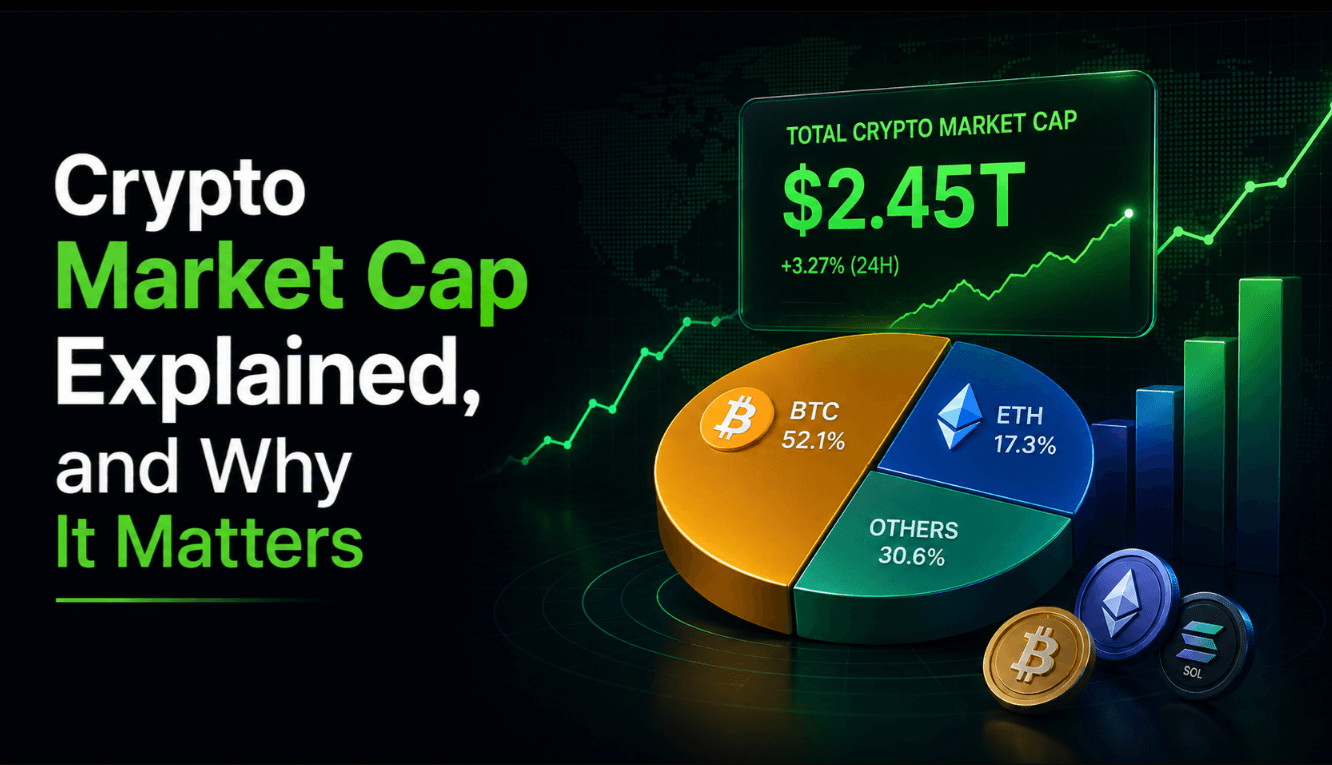
Crypto Market Cap Explained, and Why It Matters
Market cap is the headline number everyone quotes, but few use it correctly. Here is how it is calculated, what it really tells you, and where it can be misleading.
Olivia Bennett · June 1, 2026→
How to Read On-Chain Metrics: A Practical Guide
On-chain data turns a public blockchain into a window on real user behaviour. Here is how to read the core metrics, and how to avoid drawing the wrong conclusions from them.
James Park · June 10, 2026→