Reproducible Builds: Verifying the Firmware You Are Running
Open source is treated as the end of the security argument for a signing device. It is the beginning of one. Between published source and the binary on your device sits a compilation step, and only a reproducible build closes it.

By Emily Volker, Editor-in-Chief
Editorial Strategy, Investigative Journalism, Crypto Media, E-E-A-T Standards
✓ Reviewed by James Park· NFT & Web3 Gaming Analyst
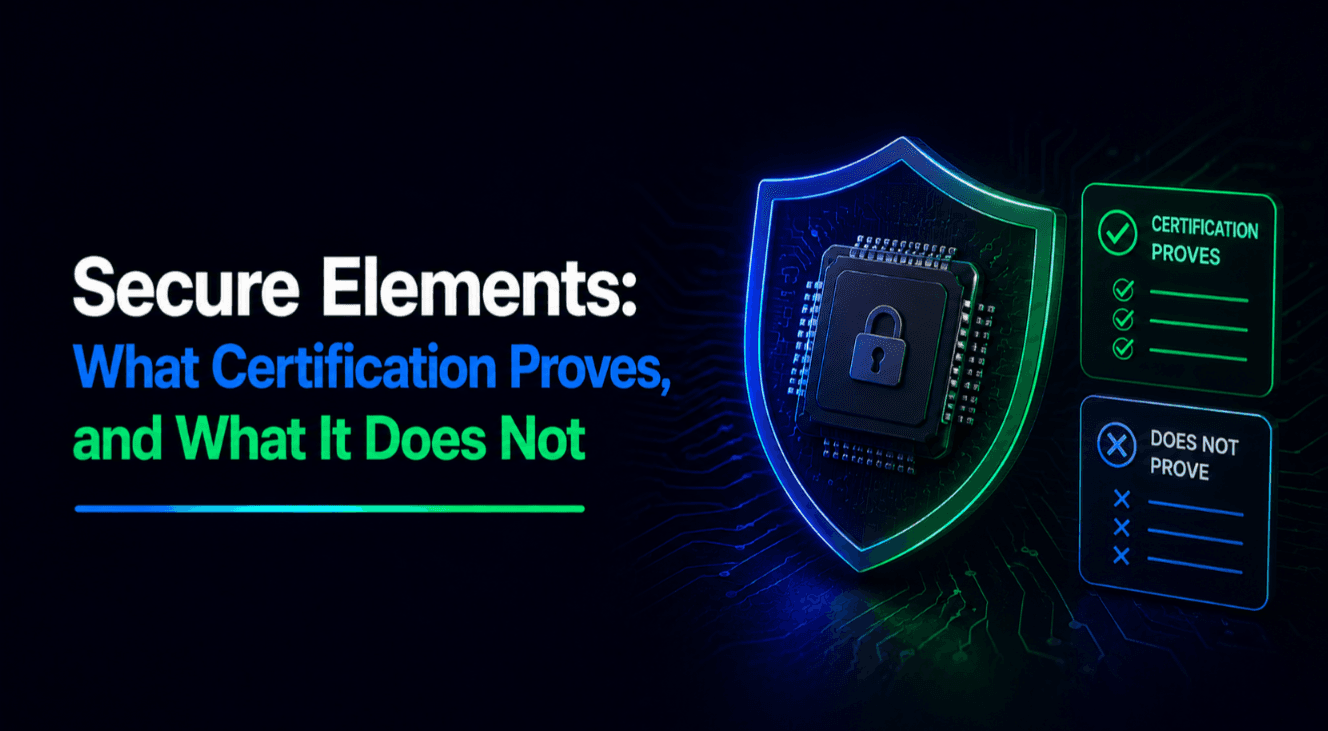
A hardware wallet's firmware decides what the device shows you and what it asks the secure element to sign. If that firmware is open source, anyone can read it and satisfy themselves it behaves correctly. What reading the source does not establish is that the source is what your device is actually running — and closing that gap is a separate engineering discipline with a name.
The gap between source and binary
Source code is compiled into a binary before it reaches a device. That step is performed by the manufacturer, on their machines, with their toolchain. The output is what gets signed and shipped.
Ordinarily you cannot check that the shipped binary corresponds to the published source. Compilers embed timestamps, absolute file paths and build-machine details, so compiling the same source twice on two machines produces two different binaries even with no tampering. With every honest build differing, a dishonest one is indistinguishable.
That is not a hypothetical concern for a device whose entire purpose is to be trustworthy about what it signs. It is the concrete difference between trusting a claim and checking one.
What reproducibility adds
A reproducible build is one where compiling the published source in a specified environment produces a bit-for-bit identical binary, every time, on anyone's machine.
Achieving it takes deliberate work: eliminating timestamps, normalising file paths, pinning every dependency to an exact version, and publishing the build environment precisely enough that someone else can recreate it. None of this is glamorous and all of it is verifiable.
Once it holds, the check is simple. Fetch the source at the released tag, build it in the published environment, compute the hash, and compare against the hash of the released firmware. A match means the binary corresponds to source you can read. A mismatch means something is wrong, and it is loud rather than silent.
The important property is that this does not require you personally to perform it. It requires that anyone can, and that people do. A discrepancy in a widely-watched project is found by someone, and the manufacturer knows that in advance — which is where most of the deterrent value lies.
What it still does not cover
Being precise about the limits keeps the claim honest.
It does not prove the source is free of bugs. Verifiable code can be verifiably wrong, and reproducibility says nothing about correctness.
It does not cover closed components. Many devices include proprietary elements — secure element operating systems in particular — that cannot be built from source at all. Reproducibility then covers the open portion, which is worth knowing rather than assuming.
It does not protect against a device that was tampered with before you received it, or firmware replaced after you verified it. Those are supply-chain and update-integrity questions with their own answers.
And it does not help if you never check and nobody else does either. The property is only as good as the community exercising it.
How to actually check
- Find the manufacturer's reproducible build instructions. Their absence is itself the answer.
- Note the exact release tag your device reports and fetch source at that tag rather than at the branch head.
- Build in the published environment, usually a pinned container image, rather than on your own machine as configured.
- Compare the resulting hash against the published firmware hash, and against what independent verifiers have reported.
- Check that independent verification is actually happening and being published. A reproducible build nobody reproduces is a claim, not a check.
Why it separates the field
Among signing devices this is the clearest available line. A device with a certified secure element and closed firmware asks you to trust that the manufacturer's code does what they say. A device with a certified secure element and reproducible open firmware asks you to trust that somebody, somewhere, is checking — and lets you be that somebody.
Neither has lost user funds to a firmware exploit, which is worth stating plainly. The difference is in what happens if one ever does, and in what you are able to establish beforehand rather than afterwards.
Sources
2 references- 01Security
ethereum.org · accessed August 22, 2026
- 02FIPS 140-3: Security Requirements for Cryptographic Modules
NIST · accessed August 22, 2026
Frequently asked questions
What is a reproducible build?+
A build where compiling the published source in a specified environment produces a bit-for-bit identical binary on anyone's machine. It lets you confirm the firmware on a device corresponds to source you can read, which ordinary compilation cannot, because compilers embed timestamps and paths that differ between honest builds.
Isn't open source enough?+
Open source means the code can be read. It does not establish that the code is what your device is running — that requires reproducibility. Without it, an honest build and a tampered one are equally indistinguishable from the source, because every build differs anyway.
Do I have to verify the firmware myself?+
No, and most people never will. The value is that anyone can and some people do: a discrepancy in a widely-watched project gets found. Reproducibility converts trust in a manufacturer into trust in a community that has the means to check.
Does a reproducible build mean the firmware is secure?+
No. It establishes correspondence between source and binary, not correctness of the source. Verifiable code can contain verifiable bugs. It also does not cover proprietary components that cannot be built from source, which on most devices includes the secure element's own operating system.
Written by
Emily VolkerEditor-in-ChiefEditorial Strategy, Investigative Journalism, Crypto Media, E-E-A-T Standards
Emily Volker is the Editor-in-Chief of CoinRadar Daily, where she leads a multilingual editorial team covering cryptocurrency markets, blockchain innovation, Web3, and global digital asset regulation across eight languages. With more than a decade of experience in financial and technology journalism, she has played a key role in developing high editorial standards and trusted reporting within the digital asset industry. Emily began her career as a financial journalist reporting on commodities, energy markets, and emerging technologies before discovering Bitcoin and decentralized finance in the early 2010s. She later moved to London to join one of Europe's early blockchain-focused media organizations, where she advanced into senior editorial leadership. Her experience reporting through both the rapid expansion of the 2017 ICO boom and the subsequent market correction reinforced her commitment to fact-based, research-driven journalism in an industry often influenced by speculation. She holds a Master's degree in International Journalism from City, University of London, and has completed executive studies in digital media strategy through the Reuters Institute at Oxford. Emily is a strong advocate for editorial transparency, rigorous verification, and responsible financial reporting. She also helped integrate Google's E-E-A-T principles—Experience, Expertise, Authoritativeness, and Trustworthiness—into the editorial standards followed by CoinRadar Daily. Under her leadership, CoinRadar Daily has expanded into a global cryptocurrency news platform publishing content in eight languages with a network of editors, analysts, and contributors across four continents. Emily oversees investigative reporting, editorial policy, content quality, and fact-checking processes to ensure every article meets the publication's standards for accuracy, credibility, and independence. Alongside her editorial responsibilities, Emily mentors aspiring journalists through digital media initiatives and regularly speaks at international conferences focused on journalism, fintech, blockchain technology, and digital assets, where she discusses responsible reporting, combating misinformation, and the evolving future of financial media.

✓Reviewed & edited by
James ParkNFT & Web3 Gaming AnalystNFTs, Web3 Gaming, GameFi, Digital Collectibles, Creator Economy
James Park serves as the NFT & Web3 Gaming Analyst at CoinRadar Daily, where he covers the rapidly evolving worlds of blockchain gaming, digital collectibles, metaverse ecosystems, and creator-driven economies. Combining expertise in interactive media with blockchain technology, he analyzes how NFTs and decentralized gaming continue to reshape digital ownership and online communities. James earned a Master of Fine Arts in Digital Media from NYU Tisch School of the Arts, giving him a unique perspective that blends creative storytelling, digital culture, and emerging technology. Rather than viewing NFTs solely through an investment lens, he examines their broader impact on entertainment, gaming, intellectual property, and community engagement. Prior to joining CoinRadar Daily, James reported on the NFT industry and blockchain gaming for several leading digital media outlets, covering the explosive growth of the NFT market, the transition toward utility-focused collections, and the evolution of GameFi. His close relationships with independent developers, digital artists, and gaming communities allow him to identify important industry trends long before they reach mainstream attention. His reporting places particular emphasis on sustainable Web3 game design, token economies, and the long-term viability of blockchain-powered virtual worlds. James has published extensive research analyzing why certain gaming ecosystems thrive while others struggle with inflationary token models, weak player retention, or unsustainable reward structures. His market analysis is frequently referenced by blockchain startups, investors, and game studios evaluating new Web3 projects. Beyond journalism, James actively participates in NFT and decentralized creator communities while following developments in digital art, virtual economies, and next-generation gaming technologies. He also contributes educational content on blockchain gaming and regularly speaks about the future of digital ownership, helping CoinRadar Daily deliver balanced, research-driven coverage at the intersection of technology, gaming, and crypto innovation.
CoinRadar Daily content is written by named analysts and checked against our editorial standards. Market data is indicative and informational only — nothing here is financial advice.
Bitcoin services, rated
How we score →Independent, rubric-scored tables covering the services this bitcoin coverage keeps running into.
Best Hardware Wallets
Top rated: Trezor Safe 5 8.6
Devices whose only job is to keep a key away from the internet.
5rated →
Best Crypto Wallets
Top rated: Rabby 8.4
Software wallets for everyday use.
5rated →
Best Crypto Exchanges
Top rated: Kraken 8.6
Centralised venues that hold your funds while you trade.
6rated →
Keep Reading
Bitcoin Self-Custody: Hardware Wallets, Seed Phrases & Security
Self-custody means holding your own keys. Here is how hardware wallets and seed phrases protect Bitcoin, and the security habits that prevent loss.
James Park · May 25, 2026→

What Is a Spot Bitcoin ETF and How Does It Work?
A spot Bitcoin ETF holds actual bitcoin and lets investors gain exposure through a brokerage account. Here is how it works and what you give up.
Emily Volker · June 1, 2026→

Bitcoin vs Gold: Which Is the Better Store of Value?
Bitcoin is often called digital gold, but the two assets store value very differently. Here is how they compare on scarcity, volatility, and risk.
Olivia Bennett · June 5, 2026→