Token Approvals: How Allowances Drain Wallets
The dominant way people lose funds from a self-custodial wallet is not a compromised key. It is a permission they granted deliberately, months earlier, to a contract they have long forgotten — and which never expires.

By Emily Volker, Editor-in-Chief
Editorial Strategy, Investigative Journalism, Crypto Media, E-E-A-T Standards
✓ Reviewed by James Park· NFT & Web3 Gaming Analyst
To let a decentralised exchange swap your tokens, you first grant it permission to move them. That grant is a separate transaction from the swap, it persists after the swap completes, and by convention it is usually for an unlimited amount. Understanding that mechanism explains most drained wallets better than any story about stolen keys.
Why the permission exists at all
Standard tokens are ledgers held in their own contracts. Your balance is a row in the token's contract, not something that lives in your wallet, and your wallet holds only the key that authorises changes to that row.
A contract that wants to move tokens on your behalf therefore has to be authorised in the token's ledger. That is the approval: a record in the token contract saying a named address may transfer up to a stated amount of your balance.
It is a sensible design for the problem it solves, and it has two properties that cause the trouble: the allowance persists until changed, and the amount is set by whoever asks.
Why unlimited became the default
Applications request unlimited approvals because the alternative costs their users money and attention. An exact-amount approval must be re-granted for every interaction, which means an extra transaction and an extra fee each time.
So the convention became: ask once, for everything, forever. It works well until the contract holding that permission turns out to be malicious, or is upgraded to something malicious, or contains a flaw someone else can use.
At that point the permission you granted is exercised. Nothing about your key was compromised; the transfer is authorised, on-chain, by you. There is no mechanism to reverse it and no party to appeal to.
The shapes an attack takes
A drainer site presents what appears to be a mint, an airdrop claim or a token migration. The transaction it asks you to sign is an approval, and the wallet's default display describes it in language most users skim past.
A compromised front end is worse because the site is legitimate. The contract addresses it points at have been swapped, and users who verify the domain — which is the advice everyone gives — are verifying the wrong thing.
An upgradeable contract that later changes behaviour is the quietest version. The approval was granted to something benign and remains granted to whatever it becomes.
Signature-based permissions add a variant worth knowing: some tokens allow an allowance to be granted by an off-chain signature rather than a transaction. Users trained to treat signing a message as harmless — because it usually is — can grant a full allowance without a transaction confirmation appearing at all.
Auditing what you have granted
Approvals are public. Every one you have granted is queryable from chain data, and several tools present them as a list with the option to revoke.
Revoking is itself a transaction, so it costs a fee, which is the friction that stops most people. The practical compromise: revoke everything on any address holding meaningful value, accept the cost, and treat it as periodic maintenance rather than a response to bad news.
The structural answer is better than the maintenance one. A separate address for interacting with applications, holding only what you are willing to lose, means an approval granted there cannot reach the address holding your position. Approvals are per-address; they do not travel.
- Audit approvals on any address holding value, and revoke anything you do not actively use.
- Keep a separate address for interacting with contracts, funded only with what a mistake could cost.
- Set exact-amount approvals where the wallet supports it, and accept the extra transaction fee as the price.
- Treat a request to sign a message with the same suspicion as a transaction, since some tokens grant allowances that way.
- Use a wallet that simulates transactions and shows the resulting balance change, which catches this class at the only moment it can be stopped.
Why this is the loss vector that matters
Key theft requires compromising a device or extracting a seed. Approval abuse requires the user to click through a screen they have clicked through many times before, and the transaction that does the damage is valid, authorised and irreversible.
That asymmetry is why wallets that put transaction simulation in front of the signature are the meaningful advance in this category, and why an audit of what you have already signed is the highest-value hour available to most self-custody holders.
Sources
3 references- 01EIP-20: Token Standard
Ethereum Improvement Proposals · accessed August 22, 2026
- 02EIP-2612: Permit — signed approvals
Ethereum Improvement Proposals · accessed August 22, 2026
- 03Security
ethereum.org · accessed August 22, 2026
Frequently asked questions
What is a token approval?+
A permission recorded in a token's contract allowing a named address to move up to a stated amount of your balance. It is a separate transaction from whatever you were trying to do, it persists after that action completes, and by convention applications request an unlimited amount.
Why are unlimited approvals the default?+
Because an exact-amount approval must be re-granted for every interaction, costing users an extra transaction and fee each time. Applications optimise for that friction, so the convention became ask once for everything — which is convenient until the approved contract turns out to be, or becomes, malicious.
How do I check what I have approved?+
Approvals are public chain data and several tools list them per address with a revoke option. Revoking costs a transaction fee, which is why most people never do it. Treat it as periodic maintenance on any address holding value rather than as a reaction to bad news.
How do I stop this happening?+
Structurally rather than by vigilance: use a separate address for interacting with contracts, funded only with what a mistake could cost. Approvals are per-address and do not travel, so one granted on your interaction address cannot reach the one holding your position.
Written by
Emily VolkerEditor-in-ChiefEditorial Strategy, Investigative Journalism, Crypto Media, E-E-A-T Standards
Emily Volker is the Editor-in-Chief of CoinRadar Daily, where she leads a multilingual editorial team covering cryptocurrency markets, blockchain innovation, Web3, and global digital asset regulation across eight languages. With more than a decade of experience in financial and technology journalism, she has played a key role in developing high editorial standards and trusted reporting within the digital asset industry. Emily began her career as a financial journalist reporting on commodities, energy markets, and emerging technologies before discovering Bitcoin and decentralized finance in the early 2010s. She later moved to London to join one of Europe's early blockchain-focused media organizations, where she advanced into senior editorial leadership. Her experience reporting through both the rapid expansion of the 2017 ICO boom and the subsequent market correction reinforced her commitment to fact-based, research-driven journalism in an industry often influenced by speculation. She holds a Master's degree in International Journalism from City, University of London, and has completed executive studies in digital media strategy through the Reuters Institute at Oxford. Emily is a strong advocate for editorial transparency, rigorous verification, and responsible financial reporting. She also helped integrate Google's E-E-A-T principles—Experience, Expertise, Authoritativeness, and Trustworthiness—into the editorial standards followed by CoinRadar Daily. Under her leadership, CoinRadar Daily has expanded into a global cryptocurrency news platform publishing content in eight languages with a network of editors, analysts, and contributors across four continents. Emily oversees investigative reporting, editorial policy, content quality, and fact-checking processes to ensure every article meets the publication's standards for accuracy, credibility, and independence. Alongside her editorial responsibilities, Emily mentors aspiring journalists through digital media initiatives and regularly speaks at international conferences focused on journalism, fintech, blockchain technology, and digital assets, where she discusses responsible reporting, combating misinformation, and the evolving future of financial media.

✓Reviewed & edited by
James ParkNFT & Web3 Gaming AnalystNFTs, Web3 Gaming, GameFi, Digital Collectibles, Creator Economy
James Park serves as the NFT & Web3 Gaming Analyst at CoinRadar Daily, where he covers the rapidly evolving worlds of blockchain gaming, digital collectibles, metaverse ecosystems, and creator-driven economies. Combining expertise in interactive media with blockchain technology, he analyzes how NFTs and decentralized gaming continue to reshape digital ownership and online communities. James earned a Master of Fine Arts in Digital Media from NYU Tisch School of the Arts, giving him a unique perspective that blends creative storytelling, digital culture, and emerging technology. Rather than viewing NFTs solely through an investment lens, he examines their broader impact on entertainment, gaming, intellectual property, and community engagement. Prior to joining CoinRadar Daily, James reported on the NFT industry and blockchain gaming for several leading digital media outlets, covering the explosive growth of the NFT market, the transition toward utility-focused collections, and the evolution of GameFi. His close relationships with independent developers, digital artists, and gaming communities allow him to identify important industry trends long before they reach mainstream attention. His reporting places particular emphasis on sustainable Web3 game design, token economies, and the long-term viability of blockchain-powered virtual worlds. James has published extensive research analyzing why certain gaming ecosystems thrive while others struggle with inflationary token models, weak player retention, or unsustainable reward structures. His market analysis is frequently referenced by blockchain startups, investors, and game studios evaluating new Web3 projects. Beyond journalism, James actively participates in NFT and decentralized creator communities while following developments in digital art, virtual economies, and next-generation gaming technologies. He also contributes educational content on blockchain gaming and regularly speaks about the future of digital ownership, helping CoinRadar Daily deliver balanced, research-driven coverage at the intersection of technology, gaming, and crypto innovation.
CoinRadar Daily content is written by named analysts and checked against our editorial standards. Market data is indicative and informational only — nothing here is financial advice.
Bitcoin services, rated
How we score →Independent, rubric-scored tables covering the services this bitcoin coverage keeps running into.
Best Hardware Wallets
Top rated: Trezor Safe 5 8.6
Devices whose only job is to keep a key away from the internet.
5rated →
Best Crypto Wallets
Top rated: Rabby 8.3
Software wallets for everyday use.
5rated →
Best Crypto Exchanges
Top rated: Kraken 8.4
Centralised venues that hold your funds while you trade.
6rated →
Keep Reading
Bitcoin Self-Custody: Hardware Wallets, Seed Phrases & Security
Self-custody means holding your own keys. Here is how hardware wallets and seed phrases protect Bitcoin, and the security habits that prevent loss.
James Park · May 25, 2026→
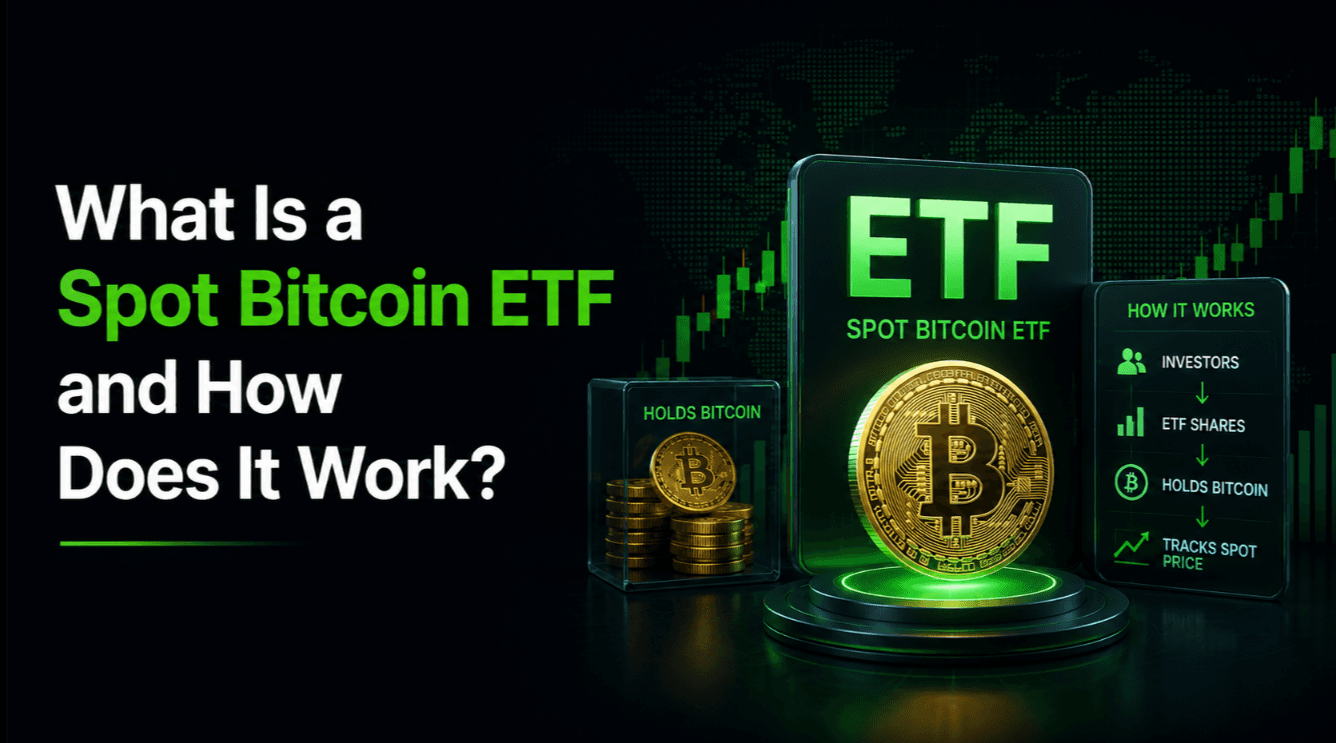
What Is a Spot Bitcoin ETF and How Does It Work?
A spot Bitcoin ETF holds actual bitcoin and lets investors gain exposure through a brokerage account. Here is how it works and what you give up.
Emily Volker · June 1, 2026→
Bitcoin vs Gold: Which Is the Better Store of Value?
Bitcoin is often called digital gold, but the two assets store value very differently. Here is how they compare on scarcity, volatility, and risk.
Olivia Bennett · June 5, 2026→