Best Liquid Staking Protocols
Top rated: Rocket Pool 8.1
Staking that hands you a tradable receipt token.
4rated →
Liquid staking has become one of the most influential trends on Ethereum, letting holders stake while keeping a usable claim. Its growth brings both convenience and new questions about concentration.

By James Park, NFT & Web3 Gaming Analyst
NFTs, Web3 Gaming, GameFi, Digital Collectibles, Creator Economy
✓ Reviewed by Olivia Bennett
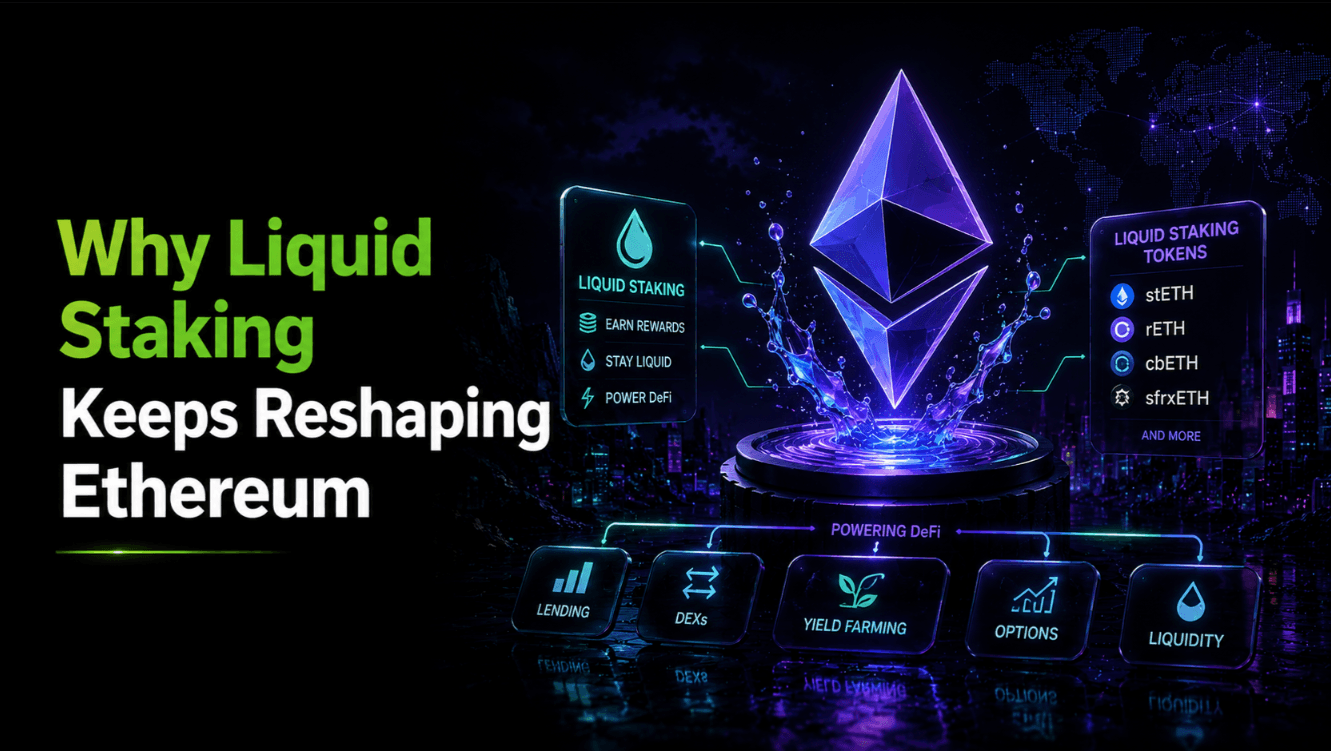
Liquid staking keeps reshaping Ethereum because it solves a basic tension: stakers want rewards, but they also want their ETH to stay useful. By issuing a token that represents staked ETH, liquid staking lets people earn while still moving value around the ecosystem, which is why it has become one of the network's most consequential trends.
Staking ETH directly locks it up. That is good for network security but inconvenient for holders who might otherwise use those funds elsewhere. Liquid staking bridges that gap by giving stakers a transferable token that tracks their underlying stake, so the same ETH can secure the network and still participate in the wider ecosystem.
This convenience is the main engine behind its popularity. For many holders, the choice is no longer between staking and staying flexible, since liquid staking offers a version of both at once.
The appeal comes with strings attached. A liquid staking token is only as reliable as the providers and contracts behind it, which introduces risks that direct staking avoids. Observers also watch for concentration, because if a small number of providers control a large share of staked ETH, the decentralization that staking is supposed to protect can erode.
Liquid staking made staking easier, but the more it spreads, the more its effect on decentralization deserves attention. — CoinRadar Daily analysis
Liquid staking is unlikely to fade, since the underlying demand for flexible, productive ETH is durable. The open questions are about balance: keeping providers diverse, contracts secure, and the broader staking base from drifting into too few hands. Read that way, its growth is less a finished story than a force the network continues to absorb.
This article is for general information only and is not financial advice. Staking and liquid staking carry risks, including loss of funds, so research providers and mechanics before participating.
Written by
James ParkNFT & Web3 Gaming AnalystJames Park serves as the NFT & Web3 Gaming Analyst at CoinRadar Daily, where he covers the rapidly evolving worlds of blockchain gaming, digital collectibles, metaverse ecosystems, and creator-driven economies. Combining expertise in interactive media with blockchain technology, he analyzes how NFTs and decentralized gaming continue to reshape digital ownership and online communities. James earned a Master of Fine Arts in Digital Media from NYU Tisch School of the Arts, giving him a unique perspective that blends creative storytelling, digital culture, and emerging technology. Rather than viewing NFTs solely through an investment lens, he examines their broader impact on entertainment, gaming, intellectual property, and community engagement. Prior to joining CoinRadar Daily, James reported on the NFT industry and blockchain gaming for several leading digital media outlets, covering the explosive growth of the NFT market, the transition toward utility-focused collections, and the evolution of GameFi. His close relationships with independent developers, digital artists, and gaming communities allow him to identify important industry trends long before they reach mainstream attention. His reporting places particular emphasis on sustainable Web3 game design, token economies, and the long-term viability of blockchain-powered virtual worlds. James has published extensive research analyzing why certain gaming ecosystems thrive while others struggle with inflationary token models, weak player retention, or unsustainable reward structures. His market analysis is frequently referenced by blockchain startups, investors, and game studios evaluating new Web3 projects. Beyond journalism, James actively participates in NFT and decentralized creator communities while following developments in digital art, virtual economies, and next-generation gaming technologies. He also contributes educational content on blockchain gaming and regularly speaks about the future of digital ownership, helping CoinRadar Daily deliver balanced, research-driven coverage at the intersection of technology, gaming, and crypto innovation.
✓ Reviewed & edited by Olivia Bennett
CoinRadar Daily Newsroom · Published June 23, 2026 · Informational, not financial advice.
Independent, rubric-scored tables covering the services this ethereum coverage keeps running into.
Top rated: Rocket Pool 8.1
Staking that hands you a tradable receipt token.
4rated →
Top rated: Figment 8.1
Services that stake on your behalf.
5rated →
Top rated: Uniswap Protocol 9.0
The base layer everything else is built on.
4rated →