Best DeFi Protocols
Top rated: Uniswap Protocol 9.0
The base layer everything else is built on.
4rated →
Liquid staking has become one of DeFi's most influential building blocks by letting staked assets stay productive. We explain the mechanics and the trade-offs.

By James Park, NFT & Web3 Gaming Analyst
NFTs, Web3 Gaming, GameFi, Digital Collectibles, Creator Economy
✓ Reviewed by Olivia Bennett
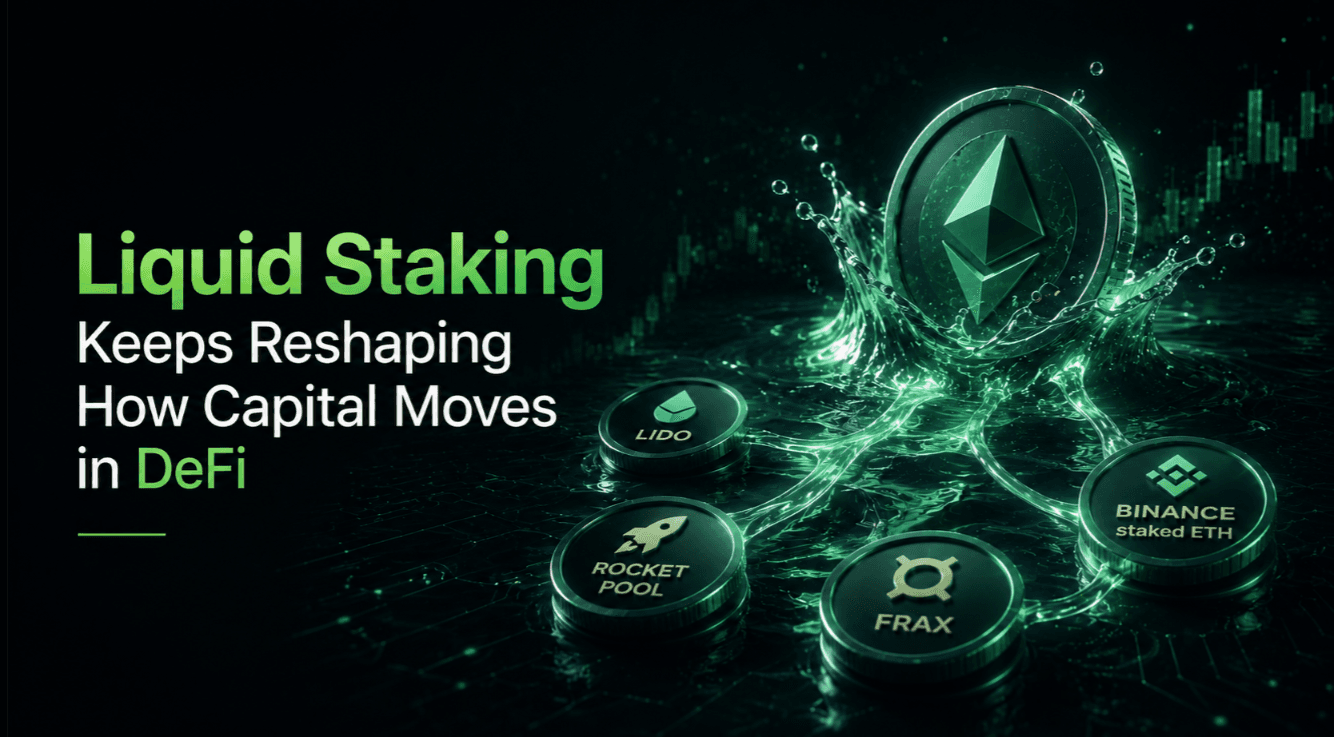
Staking traditionally forced a choice: lock an asset to help secure a network and earn rewards, or keep it free to use elsewhere. Liquid staking removes that dilemma. By issuing a tradeable token that represents a staked position, it lets holders earn staking rewards while still putting that value to work across DeFi. The idea has grown into one of the ecosystem's most influential primitives, shaping how capital flows through lending markets and liquidity pools.
When you stake through a liquid staking protocol, your assets are staked on your behalf and you receive a liquid staking token in return. That token tracks your share of the staked pool and the rewards it accrues. Crucially, the token itself remains transferable, so you can hold it, trade it, or supply it to other DeFi protocols while the underlying assets keep earning staking rewards.
This unlocks what the ecosystem calls capital efficiency. A single deposit can earn staking rewards and simultaneously serve as collateral or liquidity elsewhere, effectively letting the same capital do two jobs at once. That layering is a big part of why liquid staking tokens have spread so quickly across DeFi.
Productivity comes with added complexity and risk. Stacking a liquid staking token into further strategies compounds smart-contract exposure, since you now depend on multiple protocols functioning correctly. There is also the risk that a liquid staking token trades below the value of the assets it represents, a discount that can appear during stress and complicate exits.
Liquid staking sits at the intersection of network security and DeFi liquidity, which makes it both powerful and worth watching. As more capital flows through these tokens, they become deeply woven into lending and trading infrastructure, so their stability matters beyond their direct holders. For users, the practical takeaway is to understand each layer of risk before stacking strategies and to treat the convenience of always-productive capital as something earned through that complexity, not given for free.
Written by
James ParkNFT & Web3 Gaming AnalystJames Park serves as the NFT & Web3 Gaming Analyst at CoinRadar Daily, where he covers the rapidly evolving worlds of blockchain gaming, digital collectibles, metaverse ecosystems, and creator-driven economies. Combining expertise in interactive media with blockchain technology, he analyzes how NFTs and decentralized gaming continue to reshape digital ownership and online communities. James earned a Master of Fine Arts in Digital Media from NYU Tisch School of the Arts, giving him a unique perspective that blends creative storytelling, digital culture, and emerging technology. Rather than viewing NFTs solely through an investment lens, he examines their broader impact on entertainment, gaming, intellectual property, and community engagement. Prior to joining CoinRadar Daily, James reported on the NFT industry and blockchain gaming for several leading digital media outlets, covering the explosive growth of the NFT market, the transition toward utility-focused collections, and the evolution of GameFi. His close relationships with independent developers, digital artists, and gaming communities allow him to identify important industry trends long before they reach mainstream attention. His reporting places particular emphasis on sustainable Web3 game design, token economies, and the long-term viability of blockchain-powered virtual worlds. James has published extensive research analyzing why certain gaming ecosystems thrive while others struggle with inflationary token models, weak player retention, or unsustainable reward structures. His market analysis is frequently referenced by blockchain startups, investors, and game studios evaluating new Web3 projects. Beyond journalism, James actively participates in NFT and decentralized creator communities while following developments in digital art, virtual economies, and next-generation gaming technologies. He also contributes educational content on blockchain gaming and regularly speaks about the future of digital ownership, helping CoinRadar Daily deliver balanced, research-driven coverage at the intersection of technology, gaming, and crypto innovation.
✓ Reviewed & edited by Olivia Bennett
CoinRadar Daily Newsroom · Published June 19, 2026 · Informational, not financial advice.
Independent, rubric-scored tables covering the services this defi coverage keeps running into.
Top rated: Uniswap Protocol 9.0
The base layer everything else is built on.
4rated →
Top rated: Uniswap 8.7
Swap venues where you never hand over your keys.
5rated →
Top rated: Aave 8.3
Borrow against your holdings, or lend them out.
4rated →